Titanium vs Cast Iron Cookware: Which Should You Choose?
Quick Answer
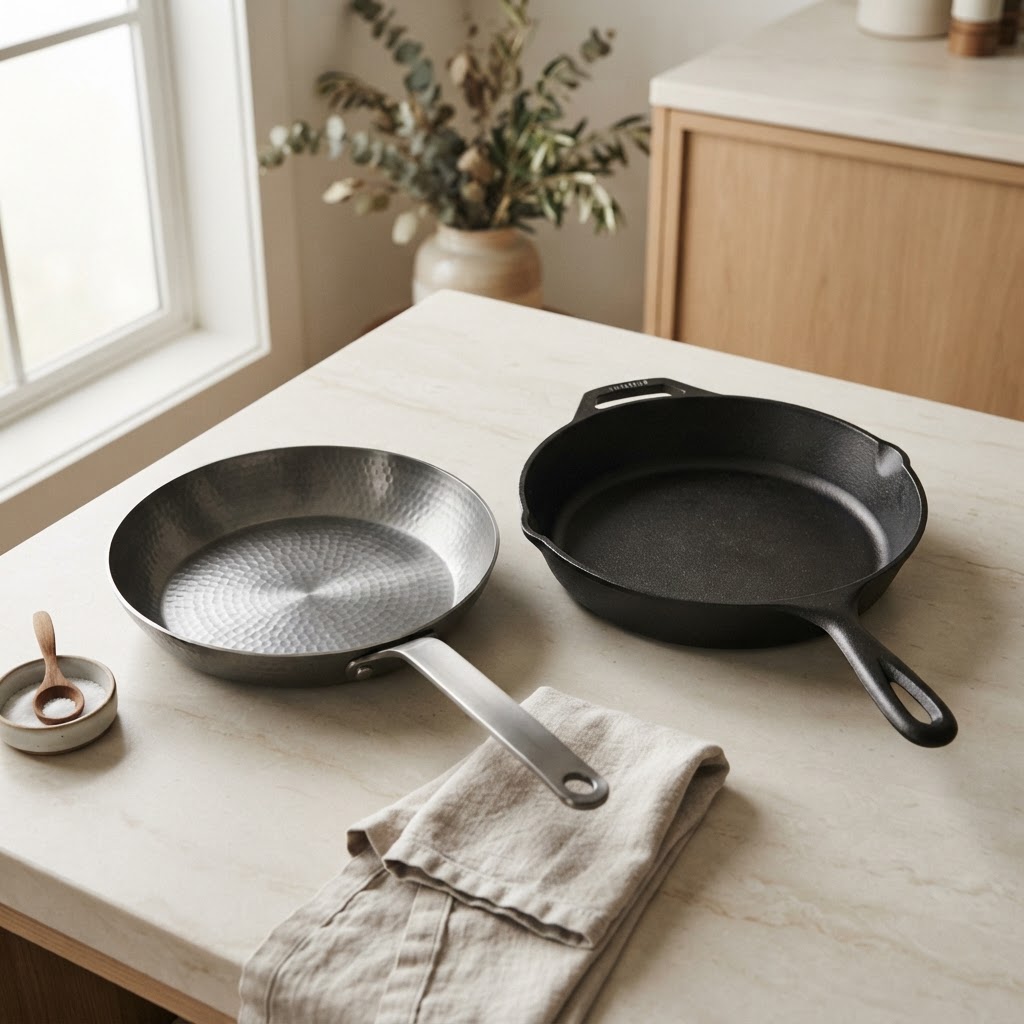
Cast iron offers excellent heat retention and strong searing, while uncoated titanium is lighter and needs no seasoning. Neither is universally better — the right choice depends on whether you prioritise stored heat and baking versatility or lighter, lower-maintenance everyday cooking.
References
- Iron in Cookware — Royal Society of Chemistry (accessed September 9, 2026)
Last fact-checked September 9, 2026
Related Products
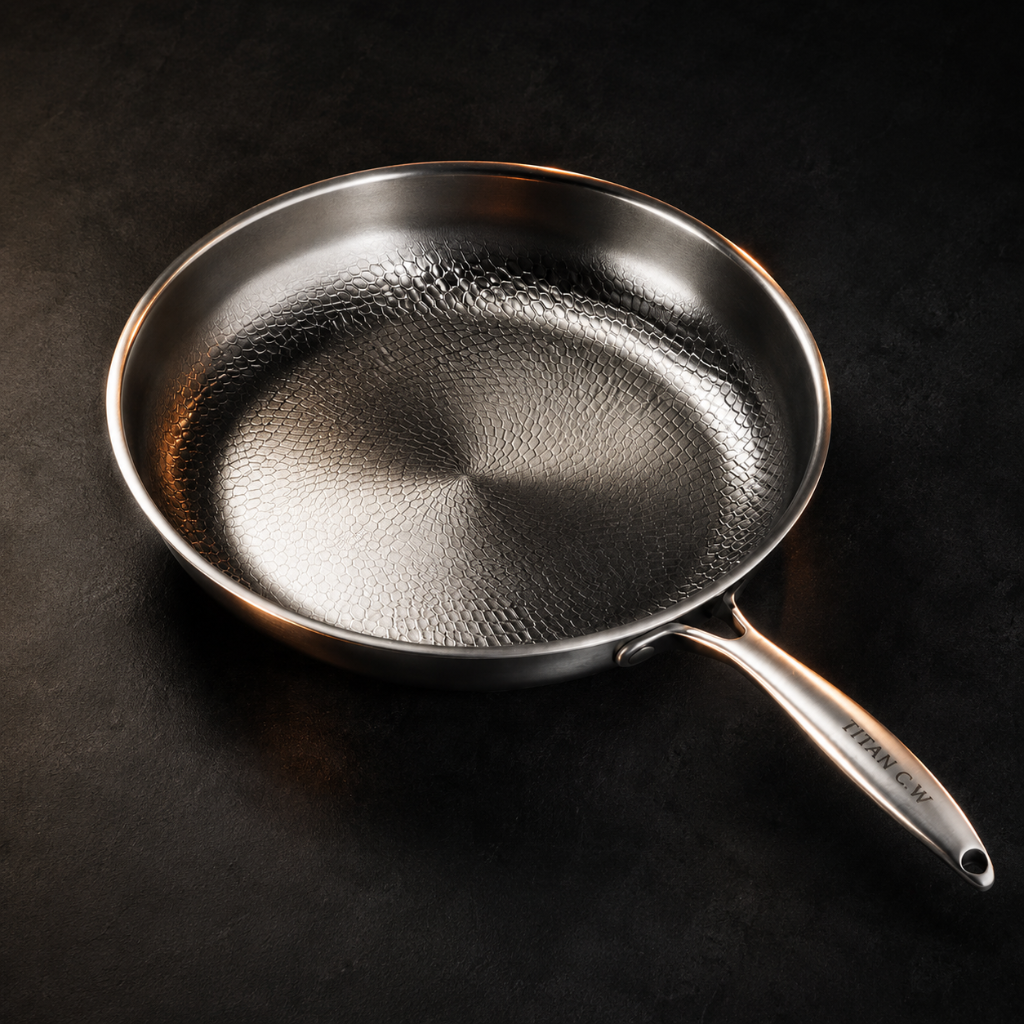
Build Your Own Titanium Set
Choose your pieces, select your sizes and create a titanium cookware set that fits the way you cook.
Build Your SetRelated Guides
Titanium Cookware Pros and Cons
Titanium cookware is extremely durable, lightweight, and free of synthetic coatings. The main drawbacks are price (solid titanium is expensive), a learning curve for food release, and the fact that titanium does not conduct heat as evenly as aluminium or copper. For most cooks, the trade-offs are worth it; for others, they may not be.
Titanium vs Stainless Steel Cookware
Stainless steel conducts heat better and is generally less expensive, while titanium is lighter, more durable, and completely free of coatings. Both are inert and safe for acidic foods. The right choice depends on your priorities: even heating and value favour stainless steel; light weight and lifetime durability favour titanium.
About the Author
Titan Cookwares Editorial Team