Titanium Cookware Guides
Practical guides to choosing, using and caring for titanium cookware — including cooking technique, material comparisons and straightforward answers to common cookware questions.
Featured Guides
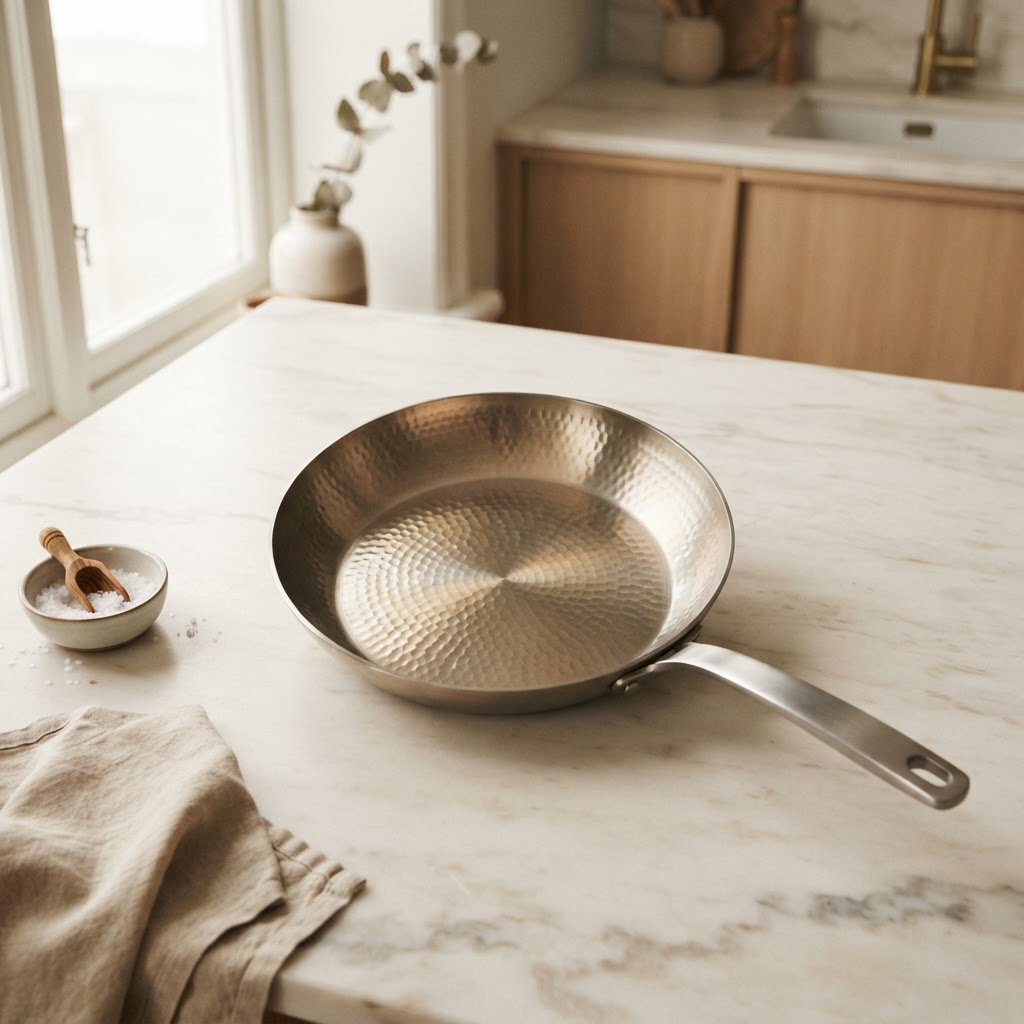
The Complete Titanium Cookware Material Guide
A reference-quality guide to titanium cookware: what it is, how it is constructed, how it compares to stainless steel and aluminium, how food release works, care, advantages, limitations, and safety terminology.
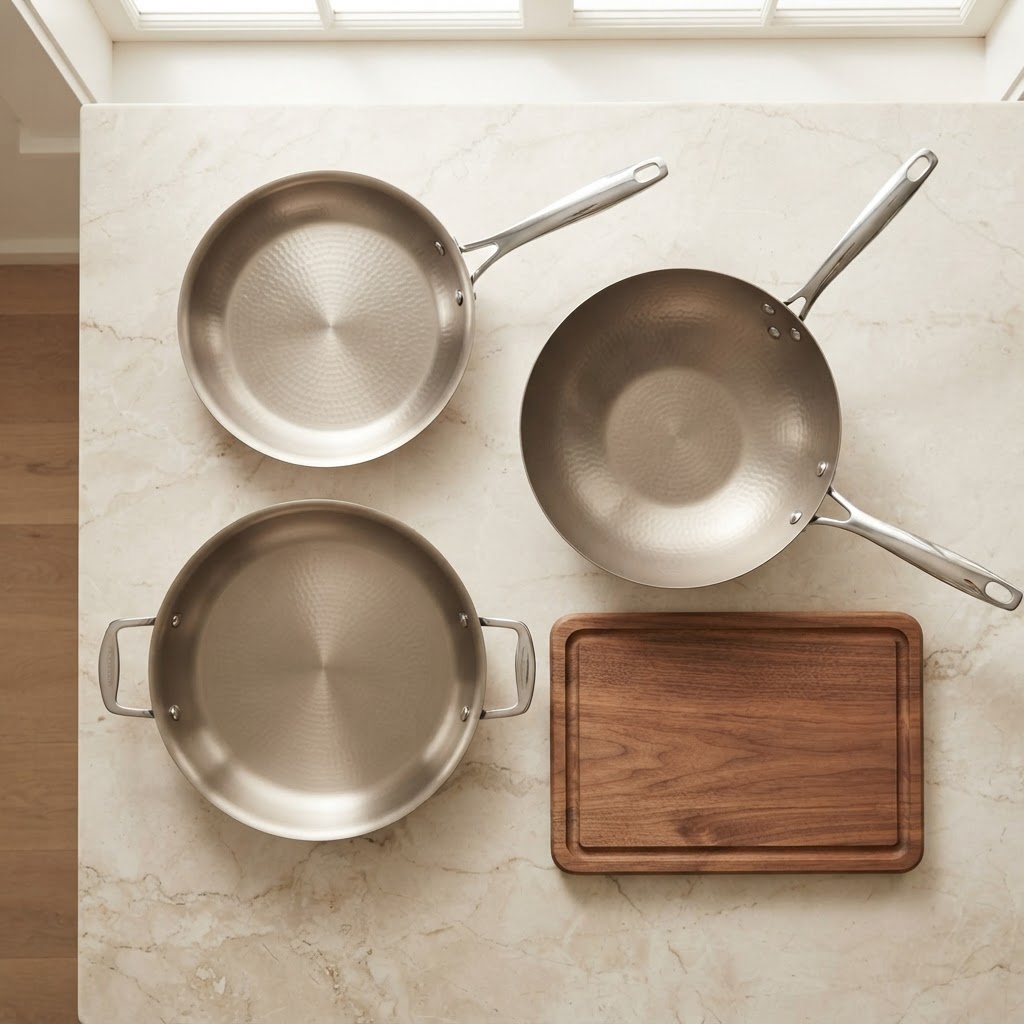
How to Build a Cookware Set That Fits the Way You Cook
Learn how to choose the right mix of frying pan, wok, sauté pan, crepe pan and prep pieces without buying cookware you rarely use.
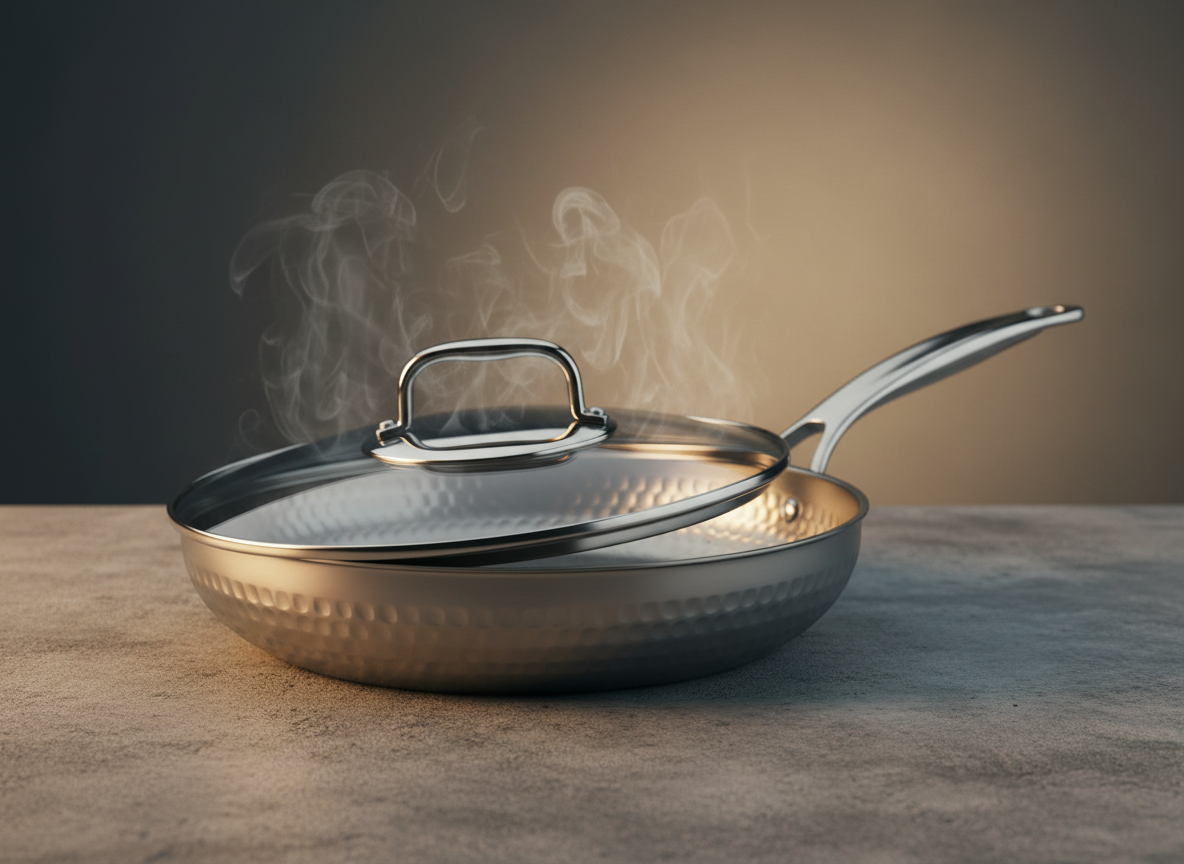
How to Cook Eggs in a Titanium Pan Without Excessive Sticking
Learn how to cook fried eggs and omelettes in titanium cookware using the right heat, preheating, cooking fat and timing.
Titanium Cookware Basics
Does Titanium Cookware Need Seasoning?
Learn whether titanium cookware needs seasoning, the difference between seasoning and lightly oiling a pan, and how to prepare it before cooking.
Titanium Cookware Pros and Cons
An honest look at the real advantages and trade-offs of titanium cookware — including durability, cooking technique, weight, maintenance and cost.
What Is Titanium Cookware?
Titanium cookware can mean very different things — solid titanium, a titanium cooking surface, multi-layer construction, or a titanium-reinforced coating. Here is how to tell them apart.
Is a Titanium Pan Really Non-Stick?
Uncoated titanium is not "non-stick" in the same way PTFE-coated pans are. It does not have a synthetic coating that makes food slide off effortlessly. However, with proper preheating and a small amount of oil, titanium achieves very good food release — and unlike coated pans, this performance does not degrade over time.
Do Titanium Pans Work on Induction?
Yes, titanium pans work on induction cooktops. Titanium is a ferromagnetic-compatible metal when alloyed for cookware, and most titanium pans will work on induction. You can test compatibility with a magnet — if a magnet sticks to the base, the pan will work on induction.
Cooking With Titanium
How to Sear Meat in Titanium Cookware
Learn how to prepare, preheat and sear meat in titanium cookware while managing moisture, heat and natural food release.
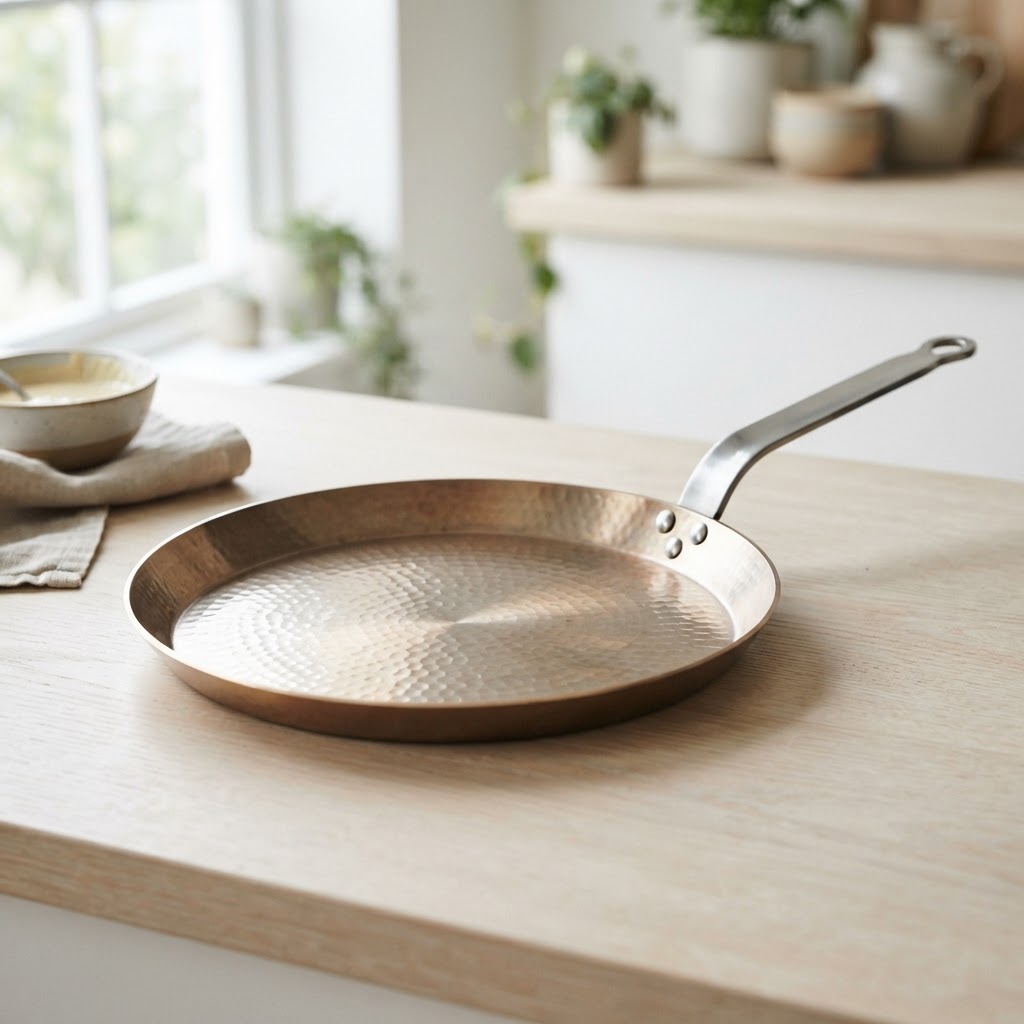
How to Cook Crepes on a Titanium Pan
Learn how to manage heat, batter, butter or oil, timing and flipping when cooking crepes on a titanium crepe pan.
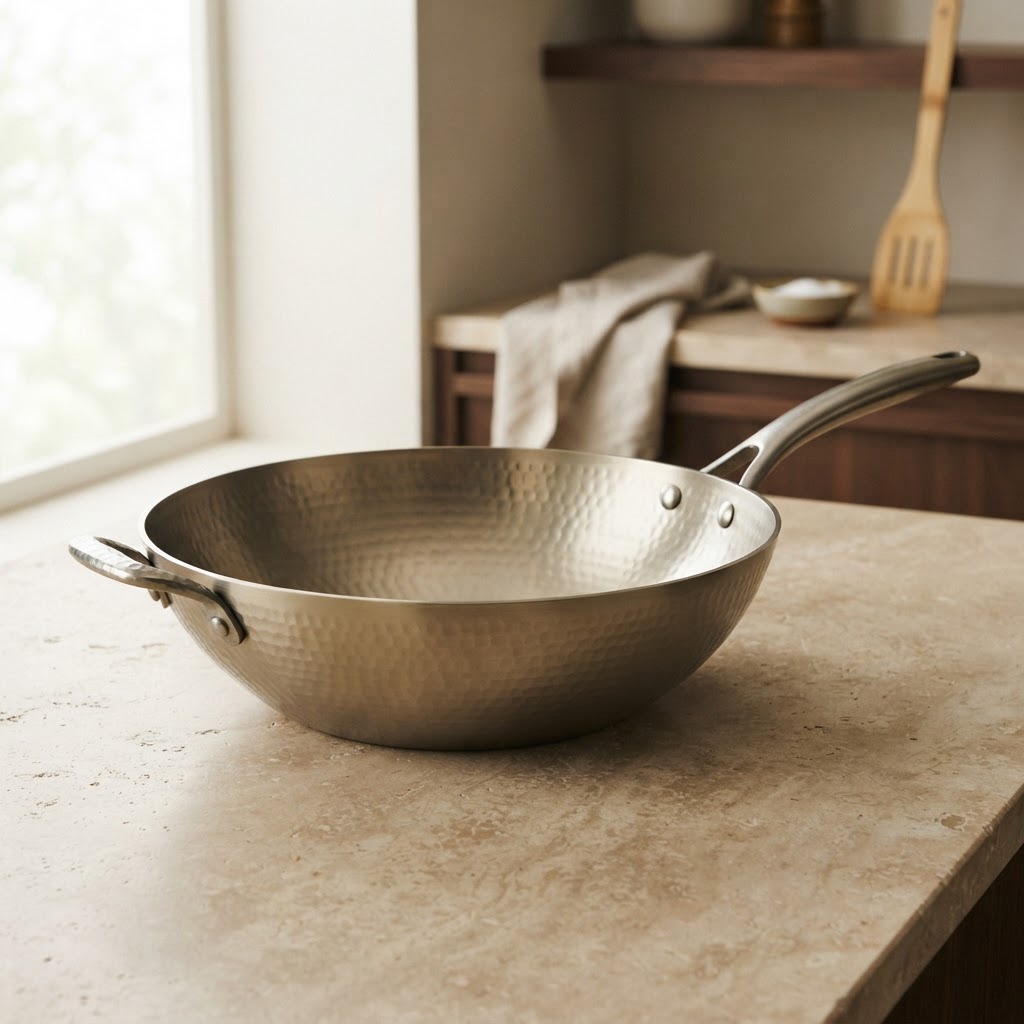
How to Use a Titanium Wok
Learn how to preheat a titanium wok, manage batches, cook stir-fries and noodles, avoid steaming and care for a flat-base titanium wok.
How to Cook Eggs in a Titanium Pan Without Excessive Sticking
Learn how to cook fried eggs and omelettes in titanium cookware using the right heat, preheating, cooking fat and timing.
How to Preheat a Titanium Pan
Learn to preheat titanium cookware using readiness cues rather than rigid timers, and avoid the common mistake of excessive heat.
How to Prevent Food Sticking to Titanium Cookware
Food sticking is usually influenced by pan temperature, moisture, cooking fat, the food itself and when you try to move it. Here is how to improve food release.
How to Cook With Titanium Cookware
Learn how to preheat titanium cookware, manage heat, use cooking fat appropriately, cook proteins and vegetables, and clean the pan after use.
How to Cook Eggs on a Titanium Pan
To cook eggs on a titanium pan without sticking: preheat the pan on low-medium heat for 2–3 minutes, add a small amount of oil or butter, and wait for the oil to shimmer before adding the eggs. The key is a properly preheated pan and patience — let the eggs set before you try to move them.
How to Properly Preheat a Titanium Pan
To preheat a titanium pan: place it on low-medium heat for 2–3 minutes before adding oil or food. Test the temperature with the water drop test — if a few drops of water bead up and skitter across the surface before evaporating, the pan is ready. Then add oil, let it shimmer, and add your food.
Care & Cleaning
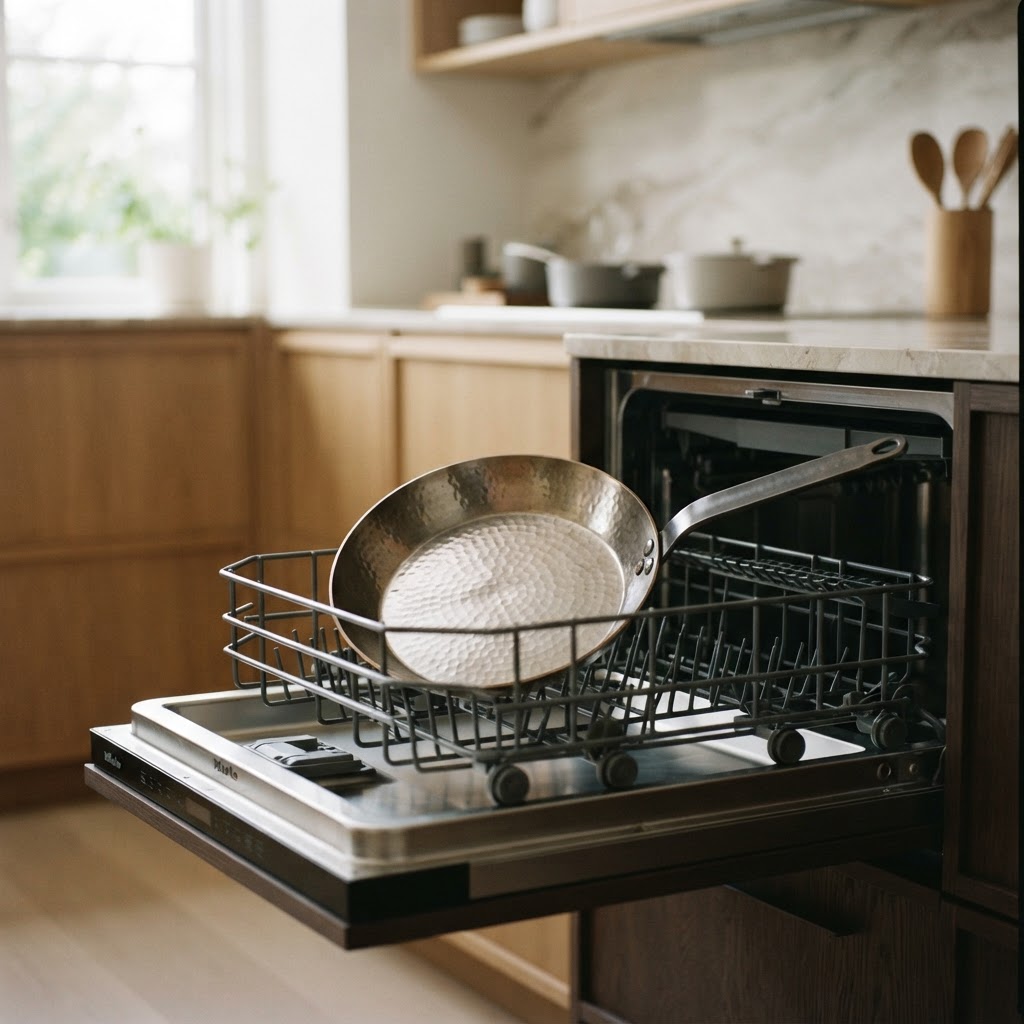
Can Titanium Cookware Go in the Dishwasher?
Find out when titanium cookware can go in the dishwasher, which product components matter, and when hand washing may be preferable.
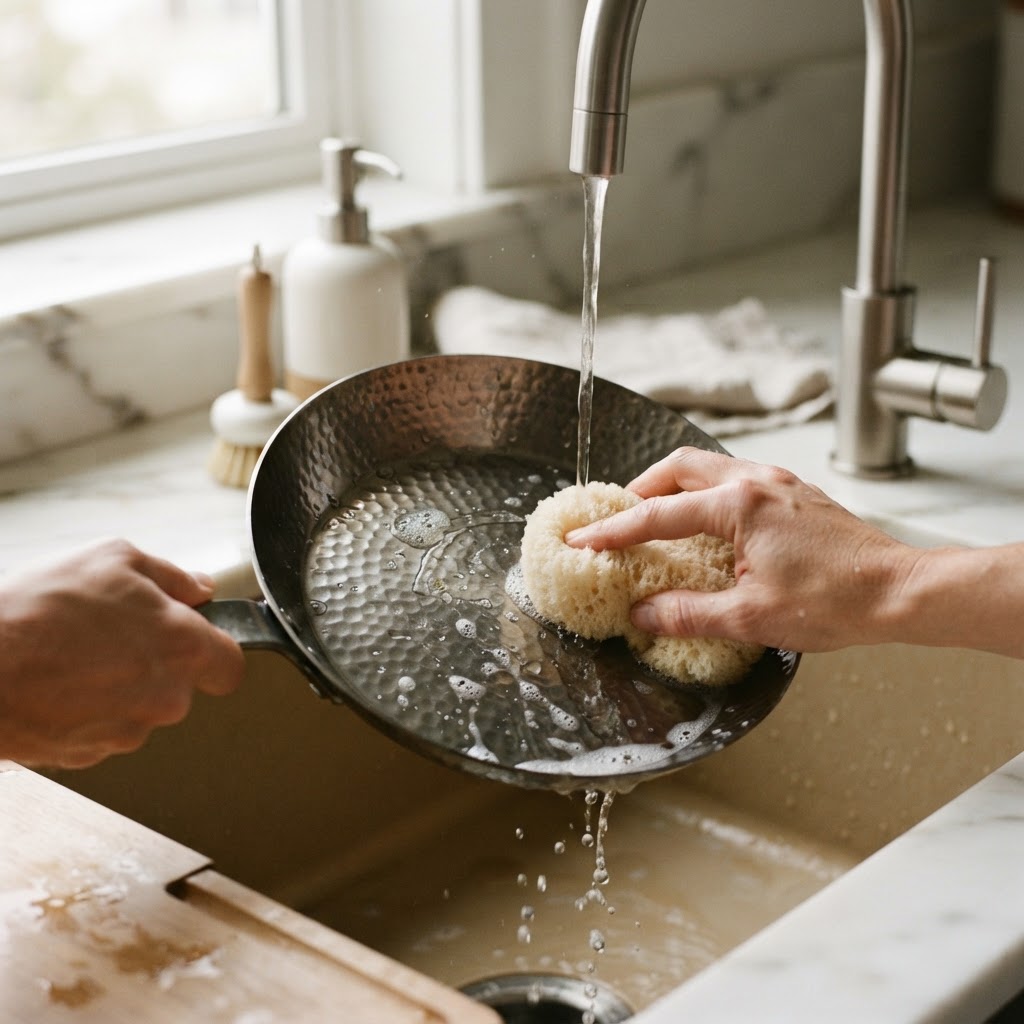
How to Remove Burnt Food From Titanium Cookware
Learn safe ways to loosen burnt food and cooking residue from titanium cookware without using unnecessarily harsh cleaning methods.
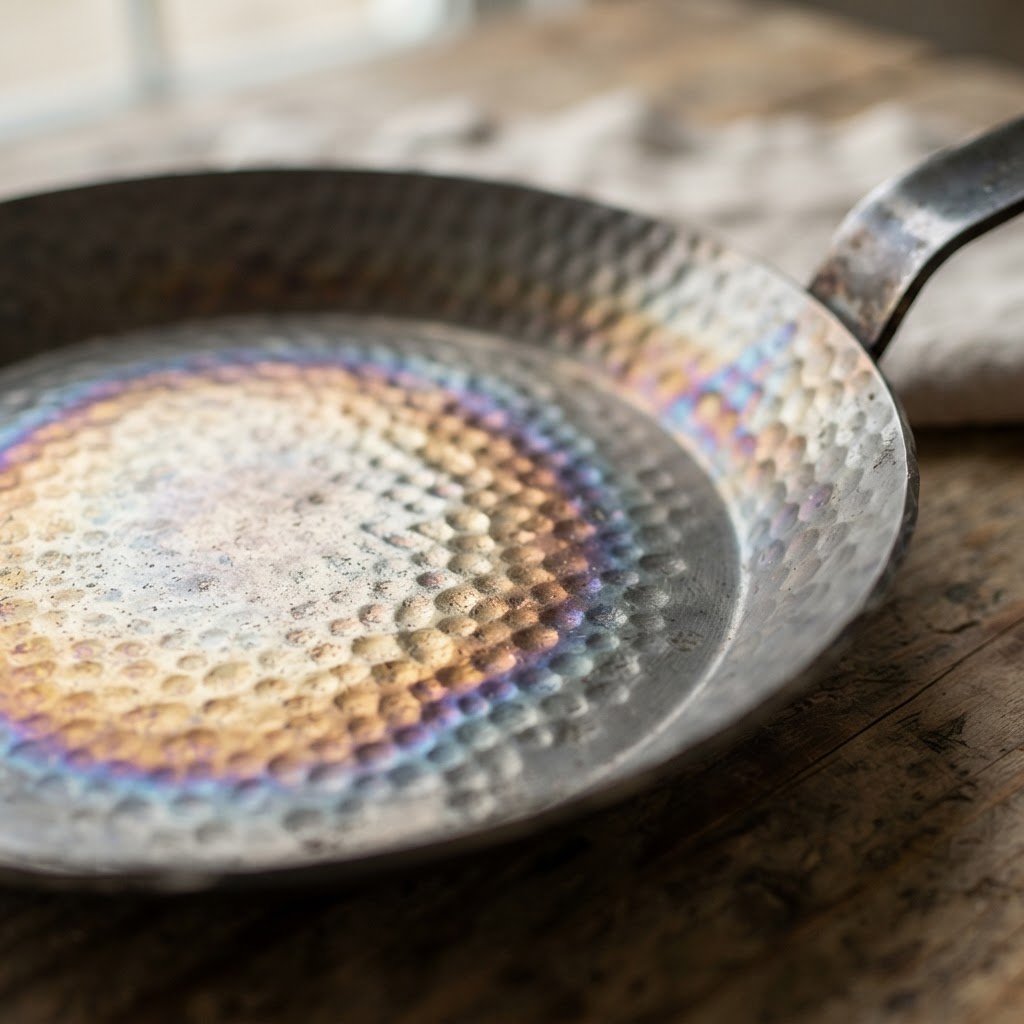
Why Does Titanium Cookware Change Colour?
Learn why titanium cookware may develop colour changes or heat tint, what can cause them and when surface changes need attention.
How to Clean Titanium Cookware
Learn how to clean titanium cookware, remove stuck-on food and residue, manage heat tint and keep your cookware ready for everyday use.
Can Titanium Pans Go in the Dishwasher?
Yes, uncoated titanium pans are dishwasher-safe. Because titanium is an inert metal with no coating to degrade, dishwasher detergent and heat will not damage it. However, hand-washing is quick and easy for most uses, and prevents the pan from rattling against other items in the dishwasher.
Can You Use Metal Utensils on Titanium?
Yes, you can use metal utensils on uncoated titanium cookware. Because there is no synthetic coating to scratch, metal spatulas, tongs, and whisks will not damage the cooking surface. This is one of the main advantages of titanium over PTFE or ceramic-coated pans.
Compare Cookware Materials
The Complete Titanium Cookware Material Guide
A reference-quality guide to titanium cookware: what it is, how it is constructed, how it compares to stainless steel and aluminium, how food release works, care, advantages, limitations, and safety terminology.
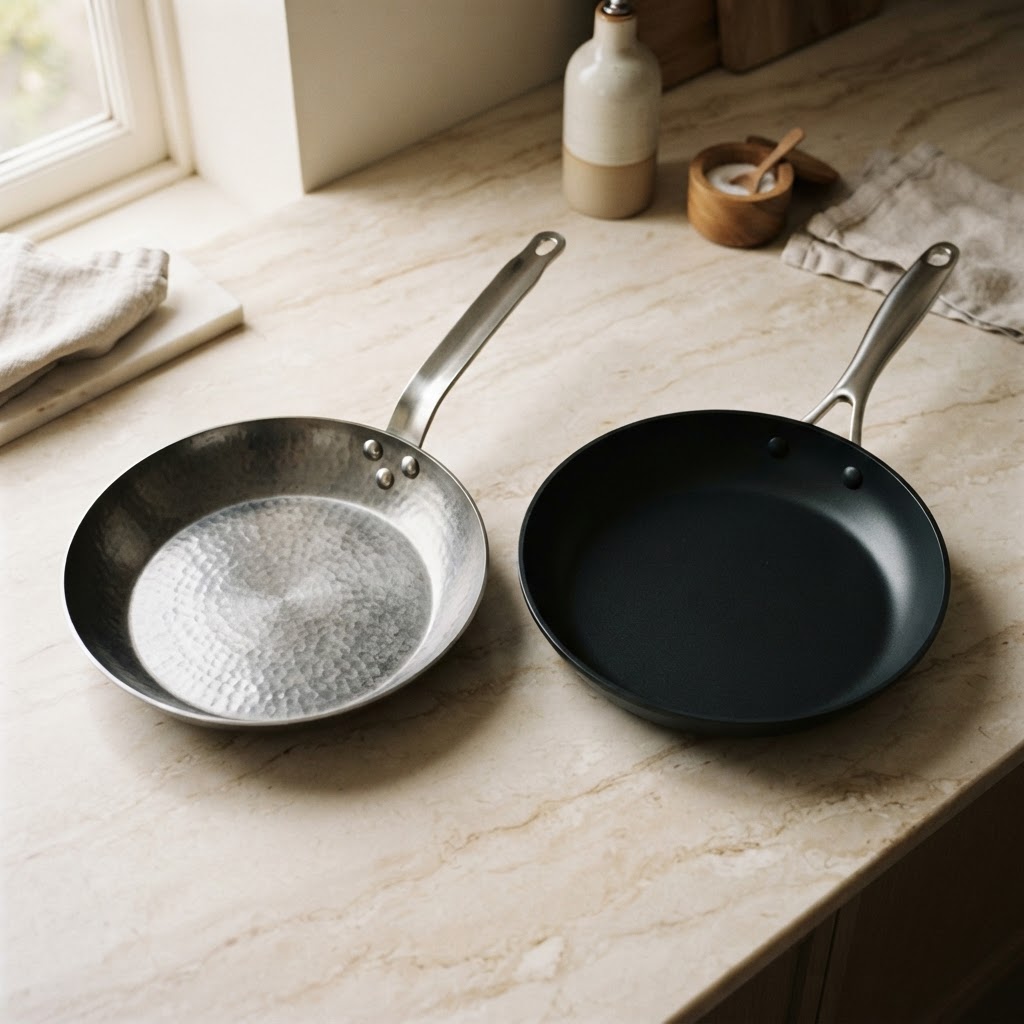
Titanium vs Traditional Non-Stick Cookware
Compare titanium cookware with traditional coated non-stick across food release, cooking technique, surface wear, heat use, utensils and maintenance.
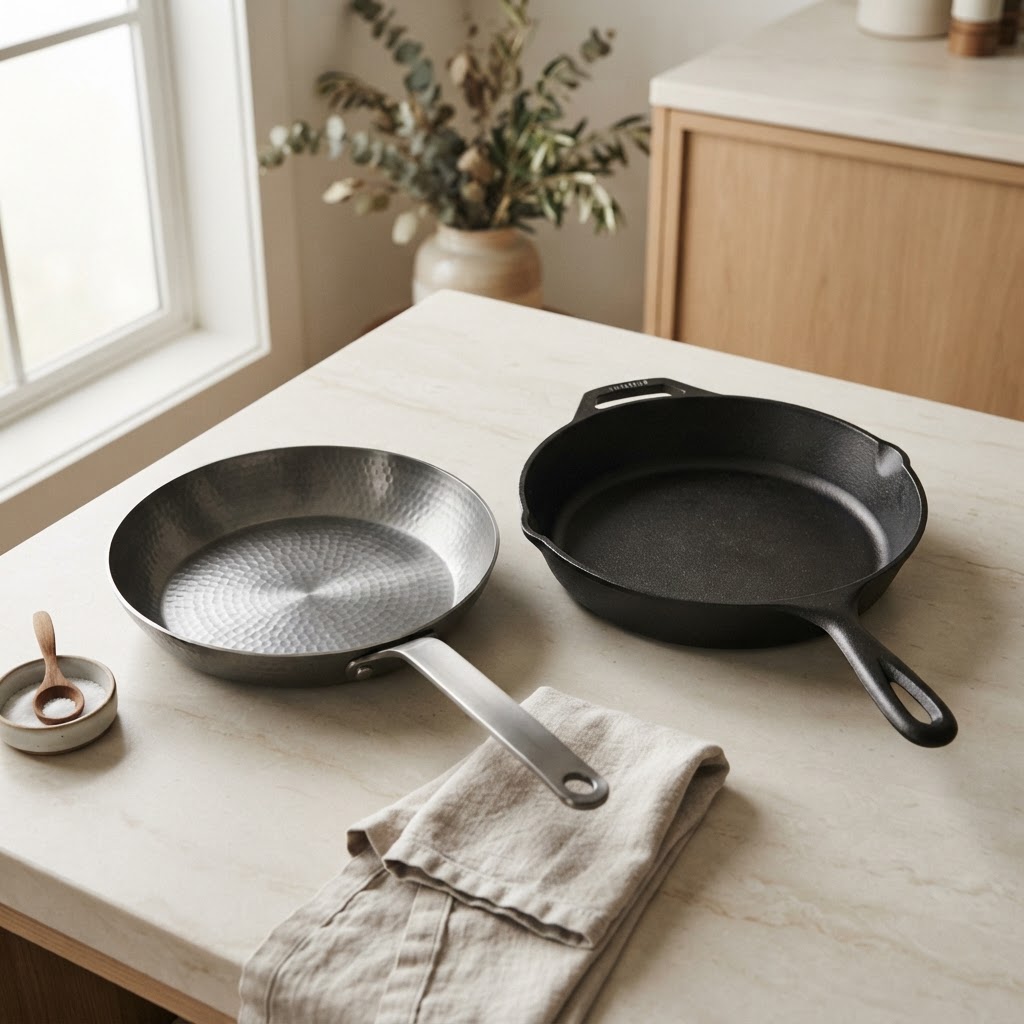
Titanium vs Cast Iron Cookware: Which Should You Choose?
Compare titanium and cast iron cookware for weight, heat retention, searing, seasoning, maintenance, versatility and everyday use.
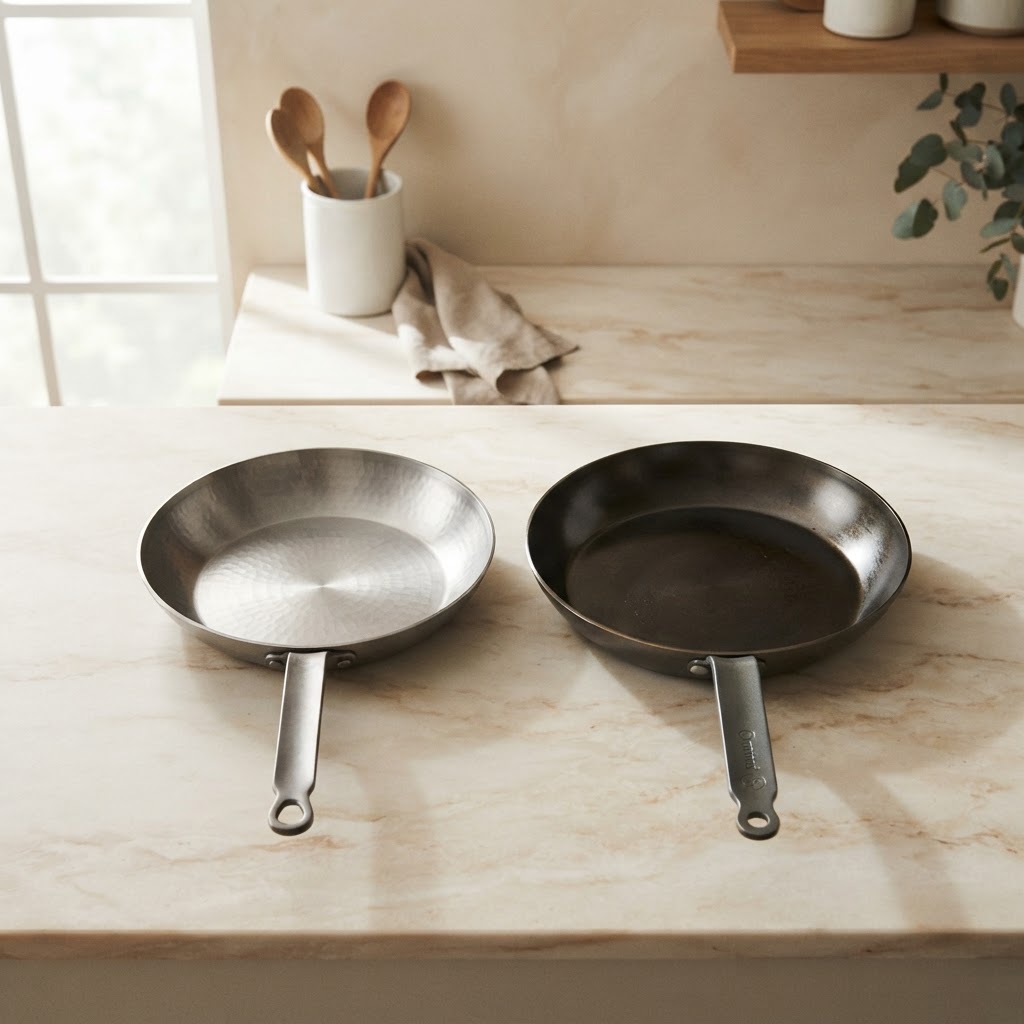
Titanium vs Carbon Steel Cookware: Key Differences
Compare titanium and carbon steel cookware across seasoning, food release, heat response, rust care, weight, maintenance and everyday use.
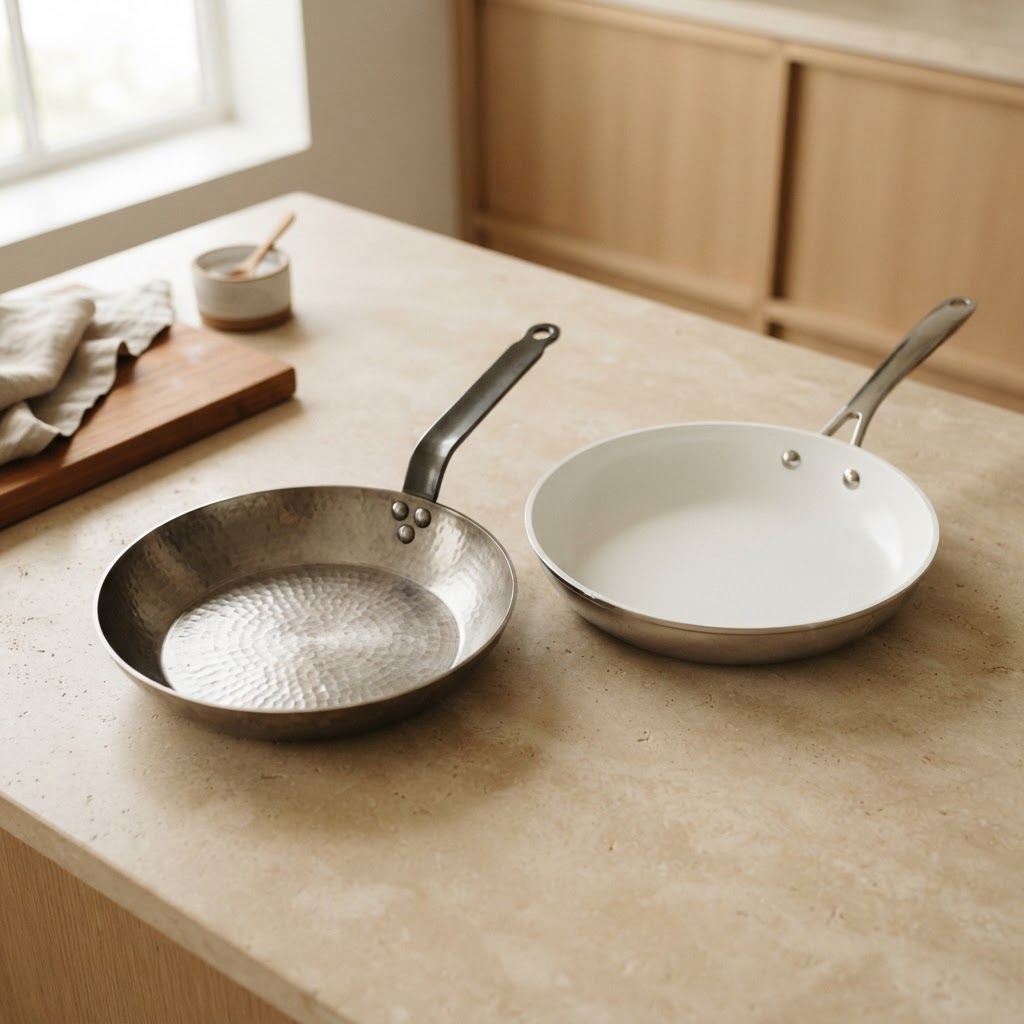
Titanium vs Ceramic Cookware: Which Is Right for You?
Compare titanium and ceramic cookware across food release, coatings, durability, heat use, maintenance, cost and everyday cooking.
Titanium vs Stainless Steel Cookware
Compare titanium and stainless steel cookware across weight, durability, cooking behaviour, maintenance, food release, price and everyday use — with a fair assessment of both.
Choose Your Cookware
How to Build a Cookware Set That Fits the Way You Cook
Learn how to choose the right mix of frying pan, wok, sauté pan, crepe pan and prep pieces without buying cookware you rarely use.
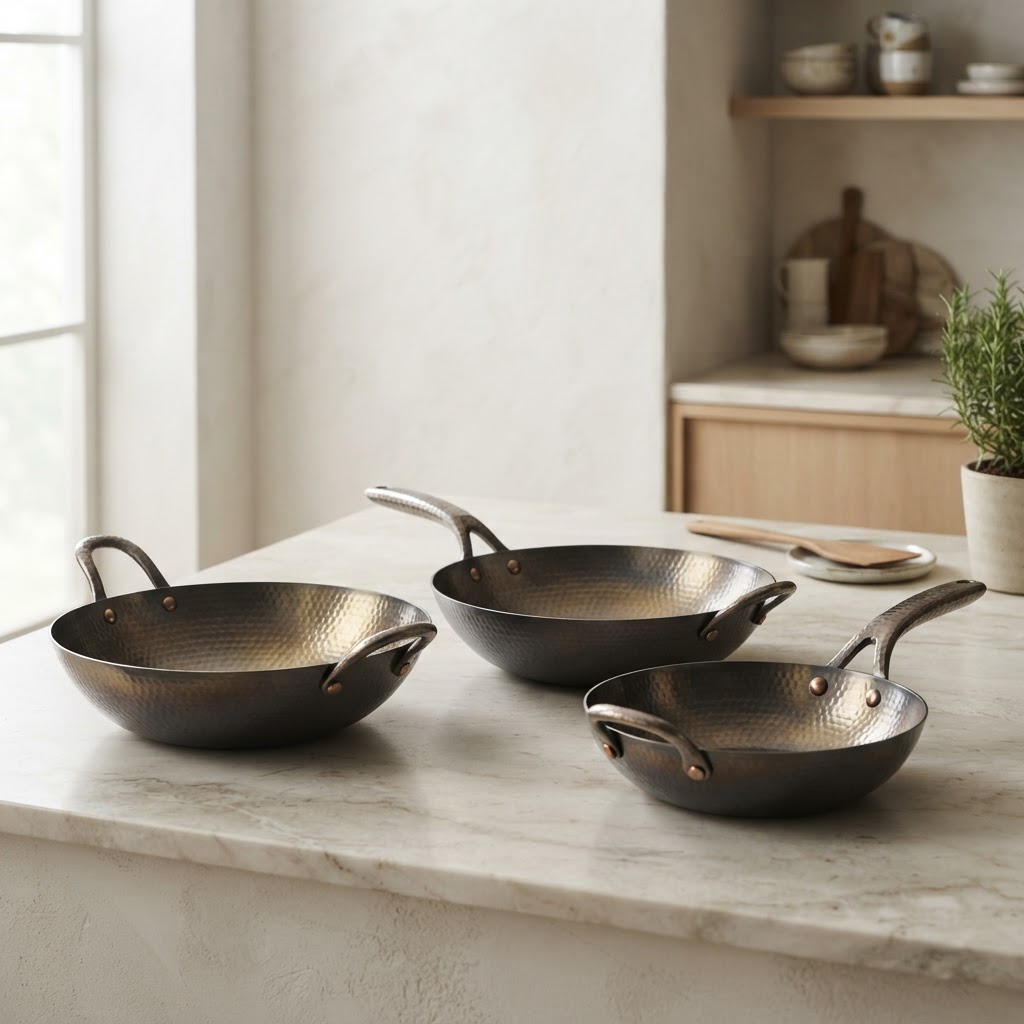
What Size Wok Should I Buy?
Choose the right wok size based on household portions, flat-base diameter, cooktop size, weight, capacity and stir-fry volume.
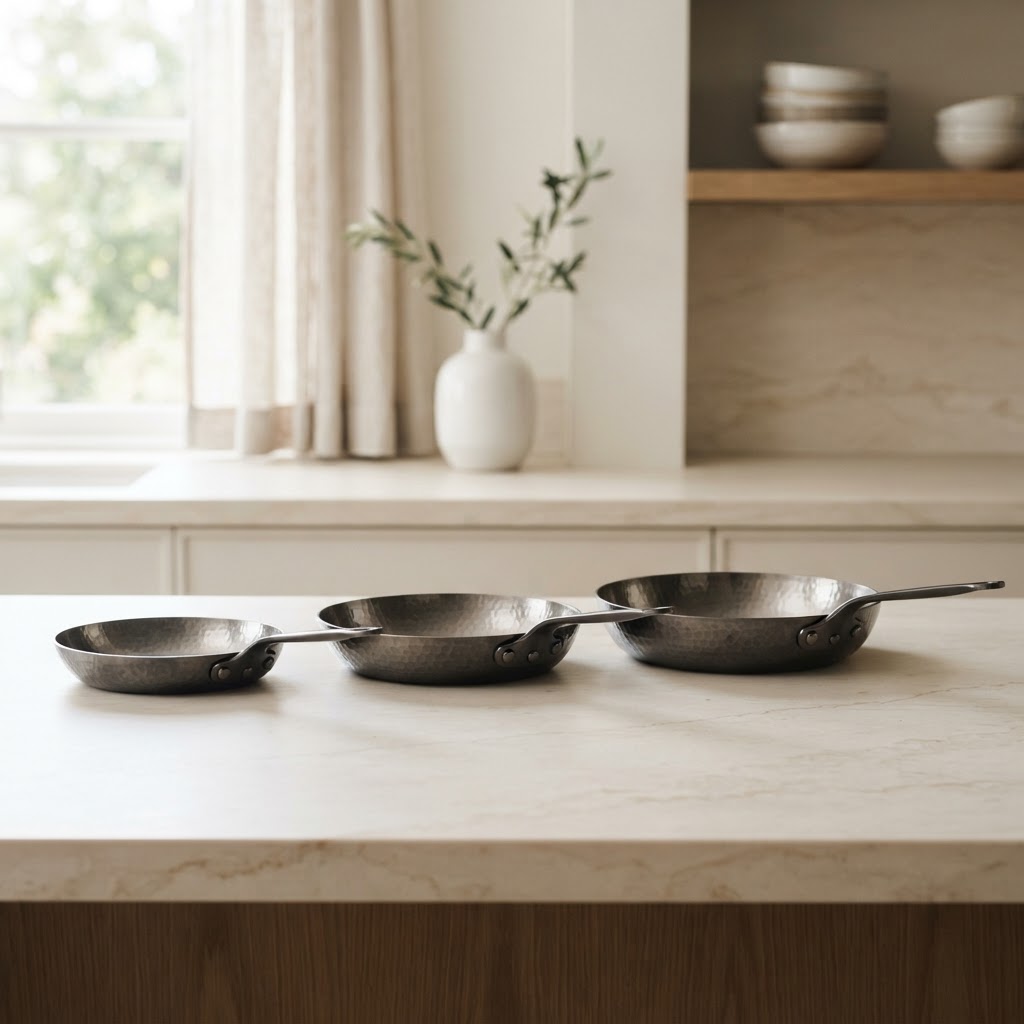
What Size Frying Pan Should I Buy?
Learn how to choose a frying pan size based on portions, hob size, cooking surface, storage and the meals you cook most often.
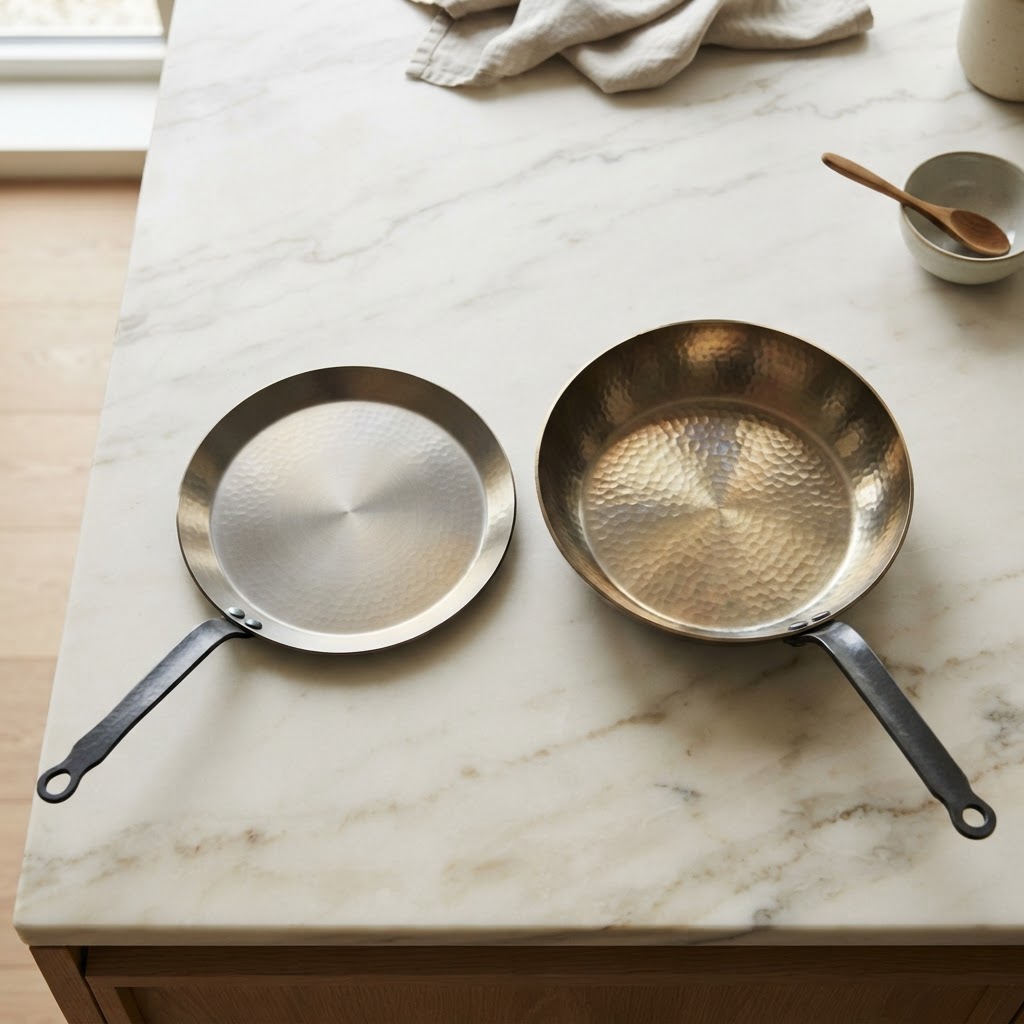
Crepe Pan vs Frying Pan: Which One Do You Need?
Compare a crepe pan and frying pan by wall height, food access, flipping, versatility, eggs, pancakes, searing and everyday cooking.
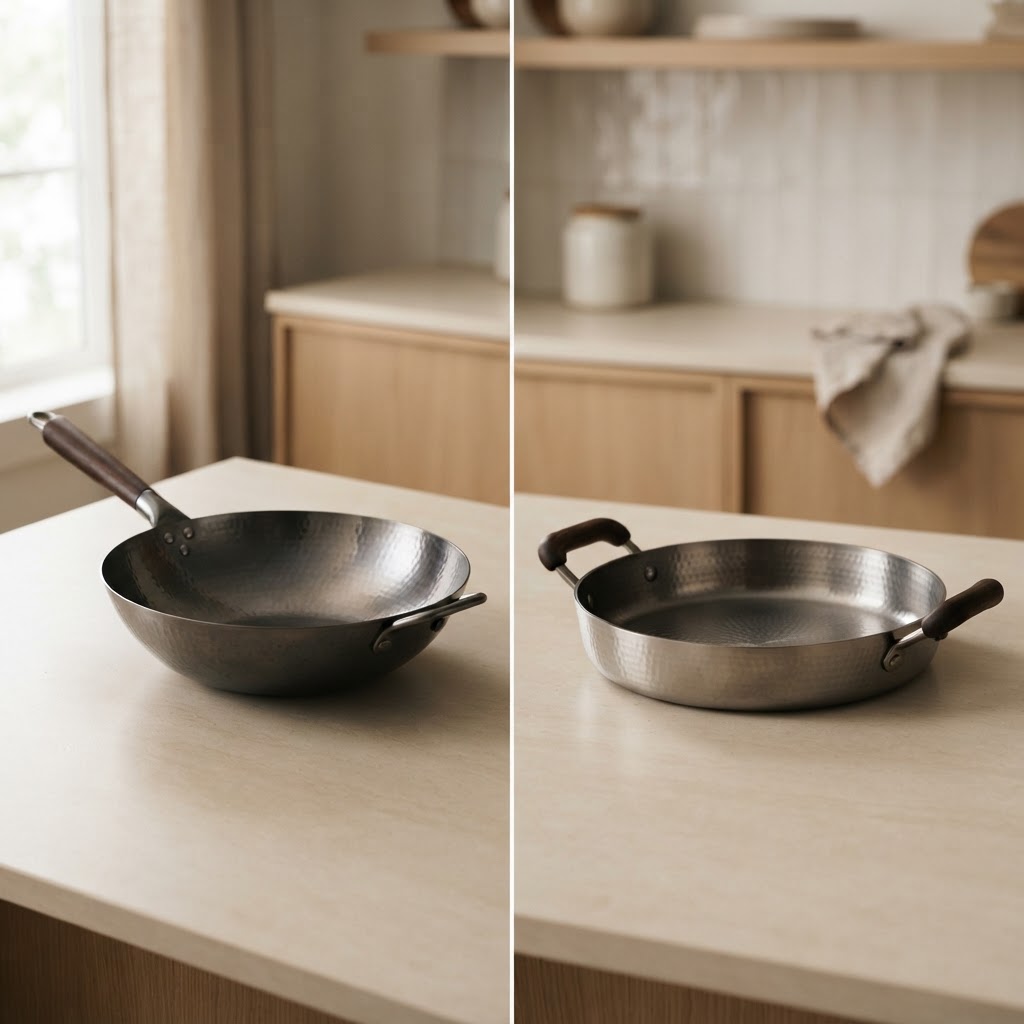
Wok vs Sauté Pan: What's the Difference?
Compare a wok and sauté pan by wall shape, capacity, tossing, sauces, simmering, family meals and everyday cooking.
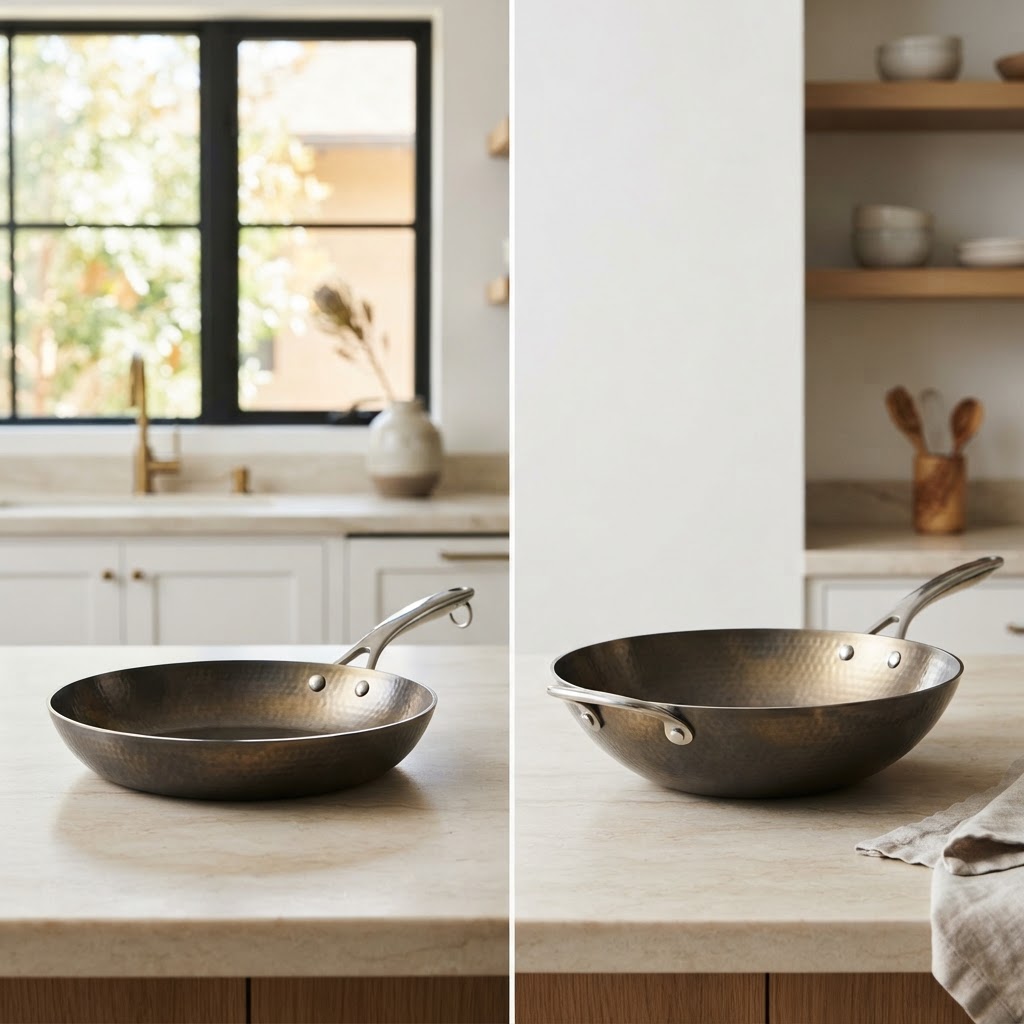
Frying Pan vs Wok: Which Should You Choose?
Compare a frying pan and wok by shape, wall height, cooking style, capacity, tossing, searing and everyday versatility.
Which Titanium Pan Is Right for Me?
Compare Titan's frying pan, wok, sauté pan and crepe pan by cooking style, shape, capacity and everyday use to choose the right pan for how you cook.
Best Non-Toxic Frying Pan: Materials Compared
The best non-toxic frying pan depends on your cooking style. For a lifetime pan with no coatings, titanium or stainless steel are excellent. For high-heat searing, cast iron or carbon steel. For easy non-stick without PTFE, ceramic (though it needs replacement). All five avoid PFAS/PTFE coatings.
How Long Does Titanium Cookware Last?
A well-made, uncoated titanium pan can last decades — potentially a lifetime with proper care. Because there is no coating to degrade, the pan does not lose functionality over time. The main factors affecting lifespan are physical damage (warping from thermal shock, dents from drops) and the quality of construction.
Cookware Safety & Materials
Is Titanium Cookware Safe?
Cookware safety depends on construction, surface, coatings and use — not just the word titanium. Learn how to assess PFAS, PTFE and cookware material claims accurately.
PFAS-Free Cookware: What Buyers Should Know
"PFAS-free" means a cookware product does not contain per- and polyfluoroalkyl substances — the family of synthetic chemicals that includes PTFE (Teflon). Uncoated materials like titanium, stainless steel, and cast iron are naturally PFAS-free. The label matters because PFAS coatings can degrade and there are ongoing regulatory efforts to restrict them.
Latest Guides
The Complete Titanium Cookware Material Guide
A reference-quality guide to titanium cookware: what it is, how it is constructed, how it compares to stainless steel and aluminium, how food release works, care, advantages, limitations, and safety terminology.
How to Build a Cookware Set That Fits the Way You Cook
Learn how to choose the right mix of frying pan, wok, sauté pan, crepe pan and prep pieces without buying cookware you rarely use.
What Size Wok Should I Buy?
Choose the right wok size based on household portions, flat-base diameter, cooktop size, weight, capacity and stir-fry volume.
What Size Frying Pan Should I Buy?
Learn how to choose a frying pan size based on portions, hob size, cooking surface, storage and the meals you cook most often.
Crepe Pan vs Frying Pan: Which One Do You Need?
Compare a crepe pan and frying pan by wall height, food access, flipping, versatility, eggs, pancakes, searing and everyday cooking.
Wok vs Sauté Pan: What's the Difference?
Compare a wok and sauté pan by wall shape, capacity, tossing, sauces, simmering, family meals and everyday cooking.
Ready to Choose Your Titanium Cookware?
Browse the full collection or build your own custom titanium set.
Editorial Standards
Our guides are written by Robert Harrison, Founder & Head of Product, with over five decades of hands-on experience in the cookware industry. We distinguish general material facts from Titan product-specific claims, and we do not publish health claims without proper context. Each article aims to genuinely answer the question asked.