Titanium vs Ceramic Cookware: Which Is Right for You?
Quick Answer
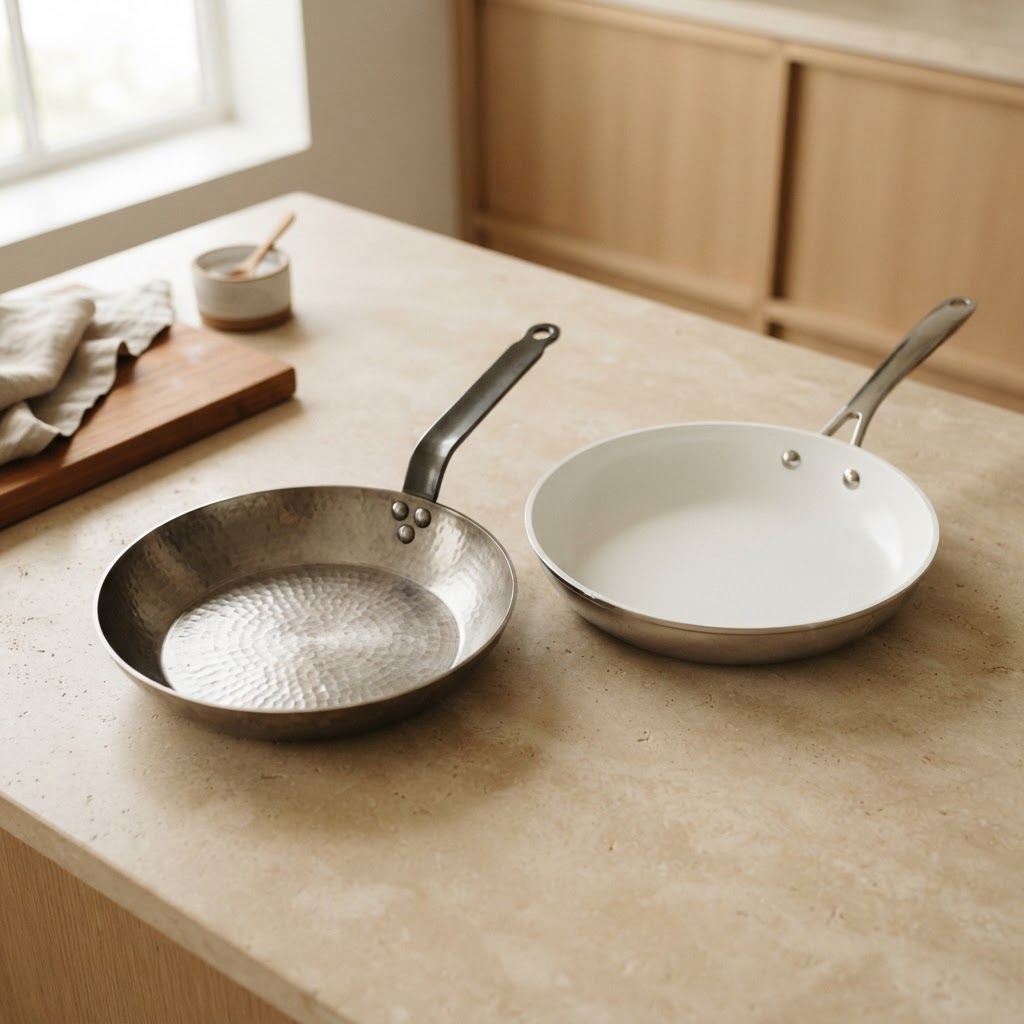
Ceramic-coated cookware offers very easy food release when new, often at a lower purchase price, while uncoated titanium cookware has no coating to degrade and can last decades with proper care. The right choice depends on whether you prioritise immediate convenience or long-term durability — and on the specific construction of each pan.
References
- FDA Food Contact Substances — U.S. Food and Drug Administration (accessed September 9, 2026)
- Ceramic and Glass Materials — American Ceramic Society (accessed September 9, 2026)
Last fact-checked September 9, 2026
Related Products
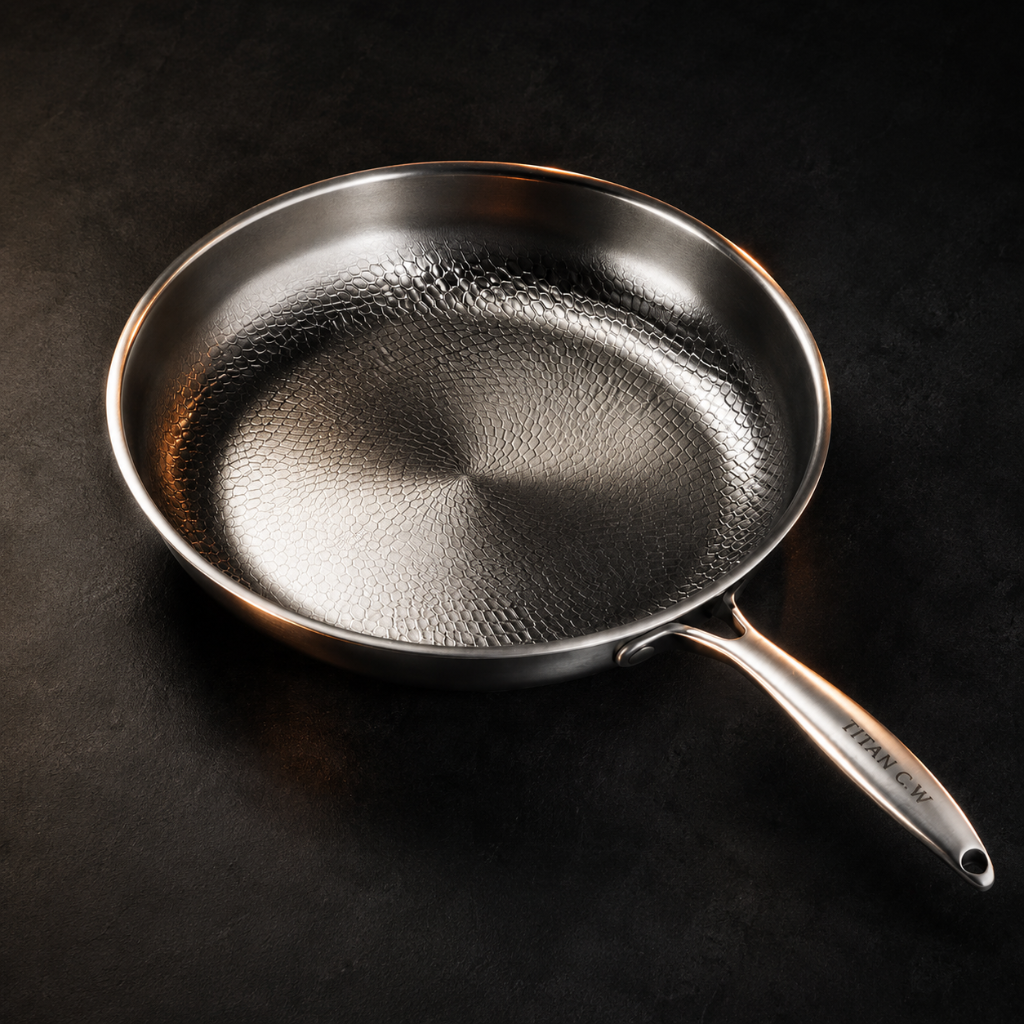
Build Your Own Titanium Set
Choose your pieces, select your sizes and create a titanium cookware set that fits the way you cook.
Build Your SetRelated Guides
Titanium Cookware Pros and Cons
Titanium cookware is extremely durable, lightweight, and free of synthetic coatings. The main drawbacks are price (solid titanium is expensive), a learning curve for food release, and the fact that titanium does not conduct heat as evenly as aluminium or copper. For most cooks, the trade-offs are worth it; for others, they may not be.
Is Titanium Cookware Safe?
Titanium cookware is widely considered safe for cooking. Titanium is biocompatible — it is used in medical implants and dental fixtures — and uncoated titanium pans do not require PFAS, PTFE, or other synthetic coatings that can raise health concerns. The main consideration is buying from a reputable manufacturer, since quality varies.
Titanium vs Stainless Steel Cookware
Stainless steel conducts heat better and is generally less expensive, while titanium is lighter, more durable, and completely free of coatings. Both are inert and safe for acidic foods. The right choice depends on your priorities: even heating and value favour stainless steel; light weight and lifetime durability favour titanium.
About the Author
Titan Cookwares Editorial Team