How to Cook Eggs in a Titanium Pan Without Excessive Sticking
Quick Answer
Use gentle heat, a small amount of fat, and patience. Uncoated titanium is not PTFE non-stick — eggs need a little fat and the right technique to release well.
Quick Method
- 1.Preheat the pan on low-to-medium heat until the surface is warm.
- 2.Add a small amount of butter or oil and let it spread.
- 3.Crack the egg directly into the warm fat.
- 4.Let the egg set before trying to move it.
- 5.Loosen the edges gently with a thin spatula before sliding or flipping.
Why Eggs Are a Challenge
Eggs are one of the most common foods people cook in a pan, and they are also one of the most likely to stick — on any uncoated surface. Egg proteins bond readily to metal as they cook, and a thin layer of egg white can set hard against the surface before it has time to release.
This does not mean titanium cookware cannot cook eggs well. It means eggs benefit from the right technique: gentle heat, a little cooking fat, and patience. Uncoated titanium is not a PTFE-style non-stick surface, and it is not meant to be used like one. With a small amount of fat and a properly preheated pan, eggs cook well — but they do not slide around with zero oil.
Equipment
A titanium frying pan is suitable for eggs. A titanium crepe pan can also work well because its low profile makes it easier to slide a spatula under the egg for turning, though it is not automatically superior to a frying pan.
A thin, flexible spatula helps loosen eggs without tearing them. A heat-resistant silicone or thin metal spatula works well with Titan's uncoated surface, which has no coating to scratch.
Step 1: Preheat Gently
Place the pan on a low-to-medium heat and let it warm gradually. See how to preheat a titanium pan for detailed guidance on reading readiness cues. For eggs, gentle heat is especially important — high heat will set the egg white too fast and cause it to bond to the surface.
Step 2: Add Fat
Once the surface is warm, add a small amount of butter or oil. Let it spread across the surface and become fluid. You do not need a large amount — just enough to coat the cooking area where the egg will sit.
Butter adds flavour but can brown quickly if the pan is too hot. If the butter browns immediately, the pan is too hot — reduce the heat before adding the egg. Oil with a higher smoke point (such as light olive oil or neutral vegetable oil) gives you more margin if you are still learning your pan.
Step 3: Add the Egg
Crack the egg directly into the warm fat. The egg should sizzle gently — not violently. A gentle sizzle means the surface is at a good working temperature. If the egg whites spread very thin and aggressively, the pan may be too hot or you may have used too little fat.
Step 4: Control the Heat
Once the egg is in, maintain a steady, moderate heat. If the white starts browning or crisping at the edges too quickly, turn the heat down. The goal is even cooking, not rapid browning.
For over-easy or fried eggs, you can cover the pan briefly with a lid to help the top set, or flip the egg once the white is firm enough.
Step 5: Wait Before Moving
Let the egg cook undisturbed until the white is set and the bottom has formed a cooked layer. Trying to move the egg too early will tear it. Once the bottom is set, run a thin spatula around the edge to loosen it, then slide under the egg to lift or flip.
Omelette Method
For an omelette, preheat gently, add a little butter or oil, then pour in beaten eggs. Let the edges set, then use a spatula to draw the cooked edges toward the centre, tilting the pan to let raw egg flow to the edges. When mostly set, fold and slide onto a plate.
Common Mistakes
Most egg-sticking problems come from one of the issues below. Use the table to diagnose and adjust.
| Problem | Likely Cause | Adjustment |
|---|---|---|
| Egg bonds immediately | Pan too hot or too little fat | Reduce heat, add a little more fat, let the pan settle before adding the egg |
| White browns too fast | Heat too high | Turn down the heat and cook more gently |
| Butter burns before egg goes in | Pan too hot for butter | Reduce heat, or switch to an oil with a higher smoke point |
| Egg spreads too thin | Pan too hot or fat too thin | Use slightly more fat and a slightly lower heat setting |
| Egg tears during turning | Moved too early | Wait until the white is fully set before loosening and flipping |
Cleaning Egg Residue
If egg residue sticks, let the pan cool, then soak in warm water with dish soap. Titan's uncoated surface tolerates abrasive sponges, so a gentle scrub with a sponge is fine. See how to clean titanium cookware for full care guidance.
Frequently Asked Questions
Will eggs slide around like they do on a non-stick pan?
No. Uncoated titanium is not a PTFE non-stick surface. With the right heat, a little fat and patience, eggs cook well and release — but they do not slide with zero oil.
Can I cook eggs without any oil or butter?
We do not recommend it. A small amount of fat helps the egg release and cook evenly. Cooking eggs with zero fat on an uncoated surface is likely to cause sticking.
My first egg stuck — is the pan faulty?
Not necessarily. It can take one or two attempts to learn the relationship between your hob and the pan. Try a slightly lower heat and a little more fat next time.
Is the crepe pan better for eggs than the frying pan?
Not automatically. The crepe pan's low profile makes spatula access easier, which some people prefer for eggs. The frying pan works well too — it comes down to personal preference.
Why did my egg white turn brown and crispy?
The heat was too high. Egg white browns quickly on a hot surface. Use a lower heat setting and let the egg cook more gently.
Related Products

Titanium Crepe Pan
A low-profile titanium pan designed for crepes, pancakes, eggs and flatbreads, with shallow edges that make it easier to reach, turn and slide delicate foods.
Titanium Frying Pan
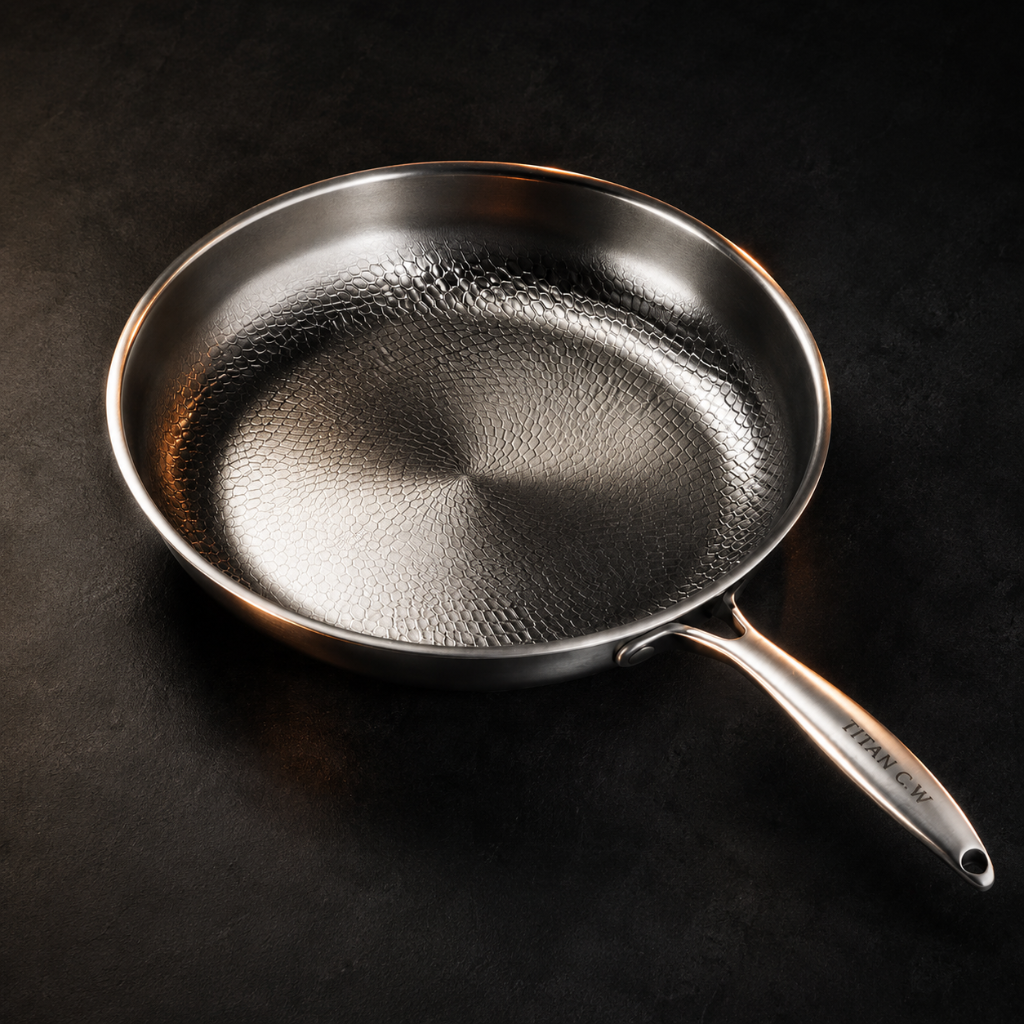
A versatile titanium frying pan designed for everyday frying, searing and stovetop-to-oven cooking, with a durable cooking surface that does not rely on a traditional sprayed non-stick coating.
About the Author
Titan Cookwares Editorial Team