How to Preheat a Titanium Pan
Quick Answer
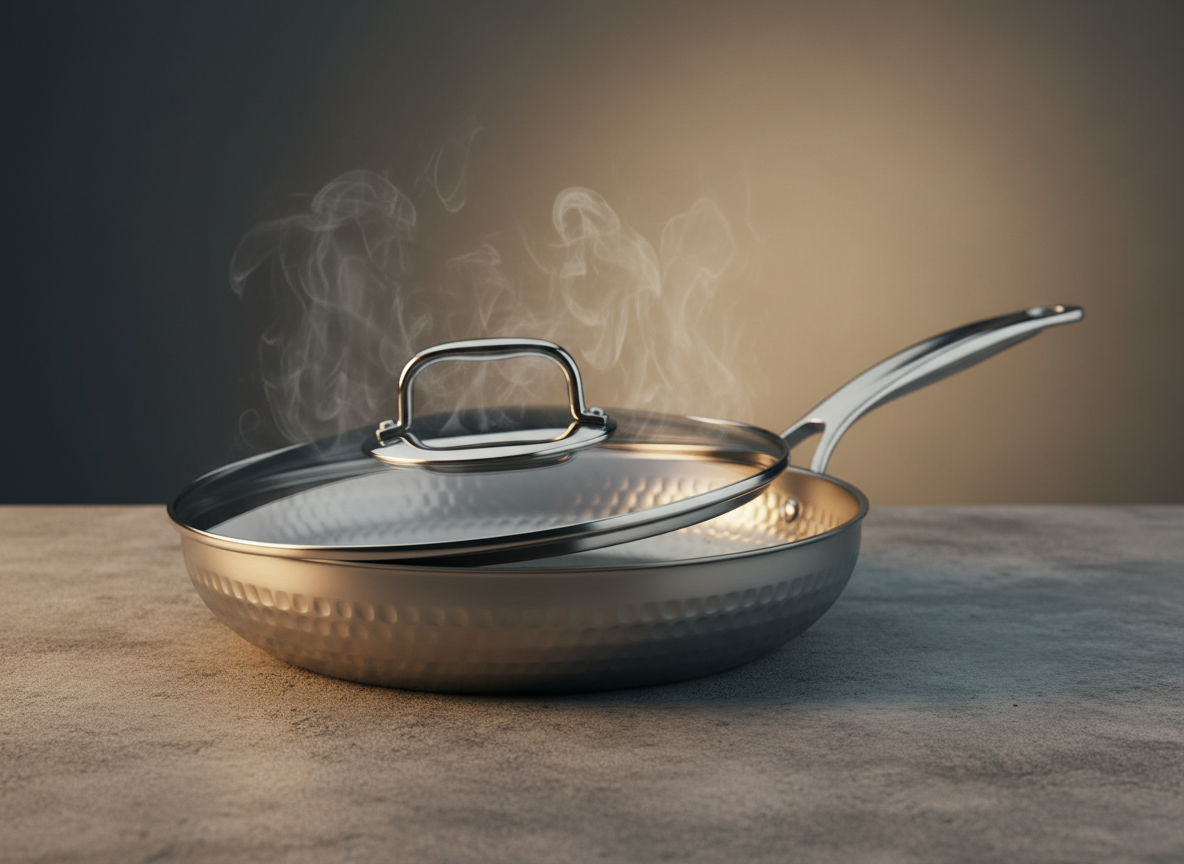
Preheat on low-to-medium heat and use readiness cues — not a fixed timer. If the fat smokes, the pan is too hot.
Quick Method
- 1.Place the empty pan on a low-to-medium heat setting.
- 2.Let the surface warm gradually — watch for cues, not a timer.
- 3.Add a small amount of cooking fat once the surface is warm.
- 4.Let the fat become fluid and spread before adding food.
- 5.If the fat smokes, the pan is too hot — reduce the heat and wait.
Why Preheating Matters
Preheating gives the cooking surface time to reach an even working temperature before food goes in. With uncoated titanium cookware, a properly preheated surface helps cooking fat spread evenly and gives food a better chance to release during cooking.
Skipping preheat — or rushing it with very high heat — is one of the most common reasons food sticks, scorches or cooks unevenly. The goal is a warm, even surface, not the hottest possible pan.
How Long Should You Preheat?
There is no universal preheat time that works for every kitchen. The time it takes depends on your hob power, the size and thickness of the pan, the material it is made from, and the temperature the pan starts at.
A small pan on a powerful gas hob will heat faster than a large pan on a low-wattage induction ring. Rather than counting to a fixed number, learn to read the cues below. This is more reliable than any timer and works across different pans and hobs.
What Heat Setting to Use
Start on a low-to-medium setting. Uncoated titanium cookware does not require maximum heat to perform well — in fact, very high heat is more likely to cause problems than improve results.
Medium heat is a good starting point for most everyday cooking. You can adjust up or down based on how the food responds. If you are used to cooking on coated non-stick pans, you may find that a slightly lower setting than you are used to gives better results on uncoated titanium.
How to Tell When the Pan Is Ready
Look for these cues rather than relying on a timer: the surface feels warm and even when you hold your hand above it. Cooking fat, once added, becomes more fluid and spreads readily across the surface rather than sitting in one place. Food sizzles gently on contact rather than aggressively.
Do not use smoking oil as a sign that the pan is ready. If your cooking fat starts smoking, the pan is too hot — reduce the heat and let it settle before adding food.
The Water-Drop Test
The water-drop test — flicking a small drop of water onto the pan and watching it bead and skitter — is a traditional way to check surface temperature. It can indicate that the surface is hot.
However, it is not a required step for Titan cookware, and it can encourage overheating if treated as a target. If the water dances aggressively, the pan may already be hotter than you need for most cooking. Use it as an occasional check, not a mandatory ritual, and never let it push you toward excessive heat.
Should You Add Oil Before or After Preheating?
For most everyday cooking, preheat the empty pan briefly, then add a small amount of cooking fat once the surface is warm. This lets the fat spread evenly and reach a working temperature with the pan.
Adding fat to a cold pan and then heating both together also works for some recipes, but you lose the ability to judge the pan's readiness independently. The key is that the fat should be warm and fluid before food goes in — not cold and pooled.
What Happens If the Pan Gets Too Hot?
Excessive heat can cause several problems regardless of the pan's material. Cooking fat can burn and smoke, food can scorch before it cooks through, and the cooking surface may develop discolouration over time.
Titanium itself has a very high melting point, but the full cookware construction — including the surface, handle and any joints — is what determines how the pan behaves in real use. Very high heat offers no advantage for most cooking and increases the risk of burnt food and surface changes. If a recipe calls for searing, see how to sear meat in titanium cookware for specific guidance.
Frequently Asked Questions
How many minutes should I preheat my titanium pan?
There is no fixed time. It depends on your hob, the pan size and the starting temperature. Learn to read readiness cues — warm surface, fluid fat, food that sizzles gently on contact — rather than counting to a set number.
Do I need to use high heat to preheat titanium cookware?
No. Low-to-medium heat is sufficient for most cooking. High heat is more likely to burn fat and scorch food than to improve results.
Should I use the water-drop test every time?
It is not required. The test can indicate a hot surface, but it can also encourage overheating. Use it as an occasional check if you wish, but do not treat it as a mandatory step.
What if my oil starts smoking during preheat?
The pan is too hot. Reduce the heat, move the pan off the heat briefly if needed, and let the temperature settle before adding food. Smoking oil means the fat is breaking down.
Can I preheat the pan dry without any oil?
Yes, you can preheat the empty pan briefly before adding fat. Just avoid prolonged high-heat preheating of an empty pan, and add fat before food so it can spread evenly.
Related Products
About the Author
Titan Cookwares Editorial Team