How to Cook With Titanium Cookware
Quick Answer
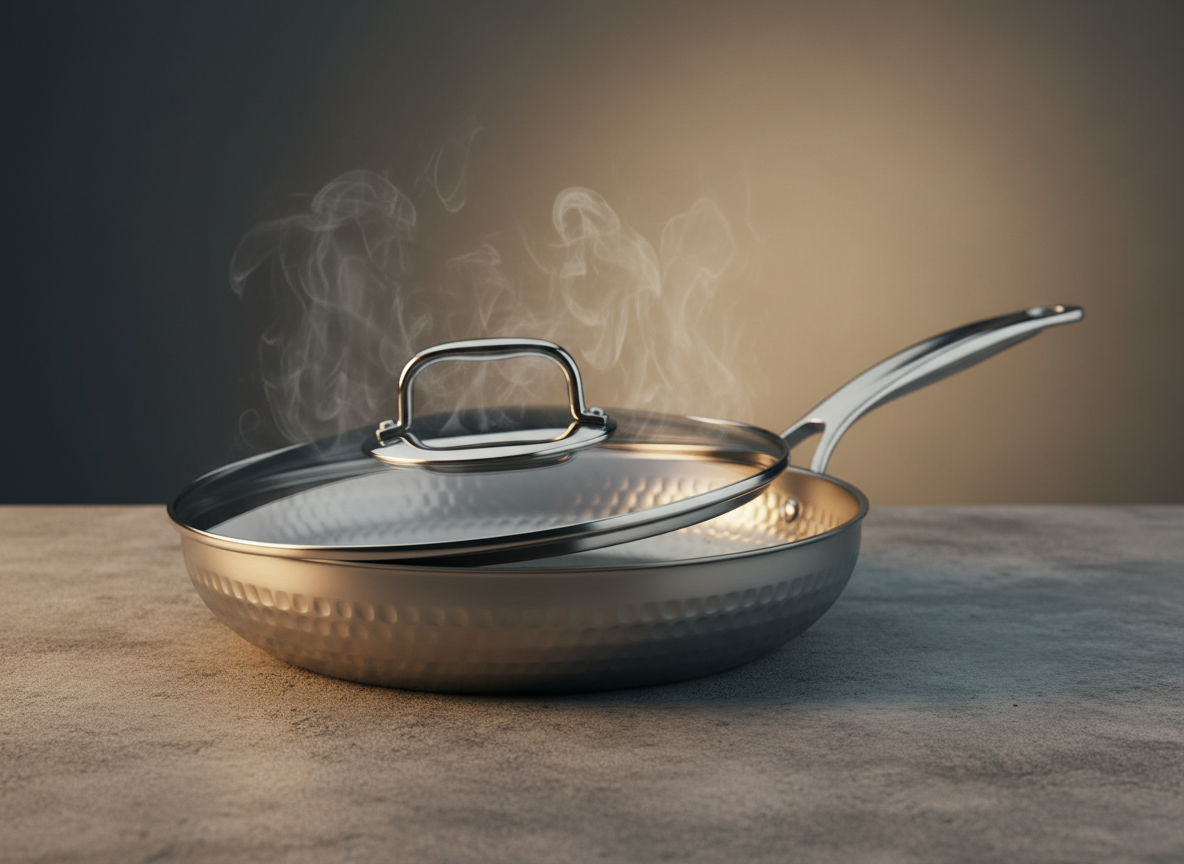
Cooking with titanium cookware works best with proper preheating, appropriate heat management and the right use of cooking fat — technique matters more than with a fresh coated non-stick surface.
Quick-Start Method
If you only read one section, read this: preheat the pan gradually, add fat when the pan is warm, add food and let it cook before you try to move it. These three habits — gradual heat, fat and patience — solve most sticking problems on titanium cookware.
The full method below explains each step in detail. If you are struggling with sticking, also read our guide on how to prevent food sticking to titanium cookware, which covers troubleshooting in depth.
Understand Your Titanium Surface
An uncoated titanium cooking surface is bare metal. There is no polymer coating to provide instant food release. Food release depends on how you manage heat, fat and timing.
This does not mean titanium is difficult to cook with — it means technique matters. Once you develop the right habits, cooking on titanium becomes straightforward and consistent.
The surface will also develop a patina with use. Some cooks find that food release improves after the first several uses as the surface becomes seasoned through normal cooking.
Step 1: Start With Correct Heat
Titanium cookware works best with moderate heat. Because titanium is not the most thermally conductive metal, very high heat can create hot spots, especially before the pan has had time to distribute heat evenly.
Start with a low to medium setting and allow the pan to warm up gradually. You can always increase the heat — but if you start too high, the pan may overheat in spots before the food is added.
The exact heat setting depends on your hob (induction, gas and electric hobs all behave differently) and the pan construction. There is no universal setting that works for every combination. Start lower than you think you need and adjust.
Step 2: Preheat
Preheating is the single most important step for food release on titanium cookware. A properly preheated pan creates a surface that food releases from more easily.
Place the empty pan on the hob at low to medium heat. Allow it to warm for 1-2 minutes. You can test whether the pan is ready by flicking a few drops of water onto the surface — if the water beads and evaporates quickly, the pan is preheated.
Do not rush preheating. A pan that is too cold is one of the most common causes of sticking. A pan that is too hot can cause oil to smoke and food to burn. Aim for a warm, even surface.
Step 3: Add Fat If Appropriate
Add cooking fat — oil, butter or ghee — once the pan is preheated. The fat provides a layer between the food and the metal surface and helps with food release.
Use an oil with an appropriate smoke point for what you are cooking. For high-heat cooking, use an oil with a high smoke point (avocado, grapeseed or refined olive oil). For lower-heat cooking, butter or extra virgin olive oil work well.
You do not always need a lot of fat. A thin, even layer is usually sufficient. The amount depends on what you are cooking — eggs and delicate foods may need a little more; seared proteins may need less than you expect once the pan is properly preheated.
Step 4: Add Food
Add food to the preheated, oiled pan. For proteins, place the food in the pan and let it settle. Do not immediately try to move or flip it.
When protein contacts a hot pan, it initially sticks. As it cooks, it releases naturally. If you try to move it too early, it will tear. Wait until the food releases on its own — you should be able to slide a spatula under it with minimal resistance.
Step 5: Let Food Release
This is the step that requires the most patience if you are used to coated non-stick. On titanium, food releases when it has formed a crust. For proteins, this usually takes 2-4 minutes depending on thickness and heat.
If the food resists when you try to move it, it is not ready. Wait another 30-60 seconds and try again. Once the crust forms, the food will release cleanly.
This natural release is a sign that the cooking process is working. It is not a sign that the pan is defective or that the food is sticking permanently.
Step 6: Adjust Heat
Once the food is in the pan, adjust the heat as needed. If the pan is smoking excessively, reduce the heat. If the food is not browning, increase it slightly.
Titanium cookware holds heat well, so you may need to reduce the heat slightly after adding food. This is normal — the pan temperature may rise as the food cooks, especially with thick pans.
Cooking Proteins
For steaks, chops and chicken: preheat the pan thoroughly, add a small amount of high-smoke-point oil, place the protein in the pan and do not move it until it releases naturally. Flip once and cook to the desired doneness.
For fish: use slightly lower heat and more fat. Delicate fish benefits from a well-preheated pan and patience. Skin-on fish releases well once the skin crisps.
For ground meats: break the meat into the pan and let it brown before stirring. Stirring too early can cause sticking.
Cooking Vegetables
Vegetables generally cook well on titanium. For stir-frying, use the titanium wok with high heat and keep the food moving. For sautéing, preheat the pan, add oil and cook vegetables until they develop colour.
Avoid overcrowding the pan. Too much food at once lowers the pan temperature and can cause steaming instead of sautéing. Cook in batches if needed.
Eggs and Delicate Foods
Eggs require more care than most foods on uncoated titanium. Use lower heat, a well-preheated pan and enough fat. Allow the egg to set before trying to move it.
For fried eggs: preheat on low, add butter or oil, crack the egg in and let the white set before sliding a spatula under it.
For scrambled eggs: use low heat and stir continuously with a silicone or metal spatula. The titanium crepe pan works well for eggs because its low profile makes flipping and sliding easy.
Titanium can cook eggs effectively, but technique usually matters more than with a fresh conventional coated non-stick surface.
Sauces and Liquids
The titanium sauté pan is well-suited for sauces and simmering because of its higher walls and larger capacity. Titanium's corrosion resistance means acidic sauces (tomato, wine-based) will not damage the surface.
For deglazing: after cooking proteins, add liquid (wine, stock or water) to the pan while it is still warm. The liquid will lift the fond (browned bits) from the surface, creating a base for sauces.
What Not to Do
Do not start with high heat — titanium can develop hot spots if heated too quickly.
Do not add food to a cold pan — this is the most common cause of sticking.
Do not try to move food before it releases — patience is essential.
Do not use cooking sprays — they can leave a residue that is difficult to remove. Use liquid oil or butter instead.
Do not subject the pan to thermal shock — let it cool before washing, or wash with warm (not cold) water while it is still warm.
Cleaning After Cooking
After cooking, allow the pan to cool slightly. Wash with warm water and dish soap. Because the surface is uncoated, abrasive sponges are safe to use — there is no coating to damage.
Titan cookware is dishwasher-safe. For stuck-on food, see our detailed guide on how to clean titanium cookware.
Frequently Asked Questions
Do you need oil with titanium cookware?
In most cases, yes. A thin layer of cooking fat helps with food release on an uncoated titanium surface. The amount depends on what you are cooking — delicate foods like eggs may need more; properly preheated proteins may need less than you expect.
Should titanium cookware be preheated?
Yes. Preheating is the single most important step for food release on titanium. A properly preheated pan creates a surface that food releases from more easily. Allow 1-2 minutes on low to medium heat before adding fat or food.
Can you cook eggs in a titanium pan?
Yes, but eggs require more technique than on a fresh coated non-stick surface. Use lower heat, a well-preheated pan and enough fat. The crepe pan works well for eggs because of its low profile.
What heat setting should I use?
Start with low to medium heat and adjust. There is no universal setting — it depends on your hob and the pan construction. Starting lower than you think you need and adjusting up is safer than starting too high.
Does titanium cookware need seasoning?
No. Uncoated titanium does not require seasoning like cast iron or carbon steel. The cooking surface is bare titanium metal. However, the surface may develop a patina through normal use that some cooks find improves food release.
Related Products

Titanium Crepe Pan
A low-profile titanium pan designed for crepes, pancakes, eggs and flatbreads, with shallow edges that make it easier to reach, turn and slide delicate foods.

Titanium Sauté Pan
A deeper titanium sauté pan designed for family meals, sauces, simmering and larger one-pan recipes. Two side handles make it easier to lift, carry and serve than a comparable long-handled pan.

Titanium Wok
A high-sided titanium wok designed for stir-fries, noodles, fried rice and larger one-pan meals. The flat-base design is intended for use on compatible flat cooktops while the sloped sides give you room to toss, turn and move food.
Titanium Frying Pan
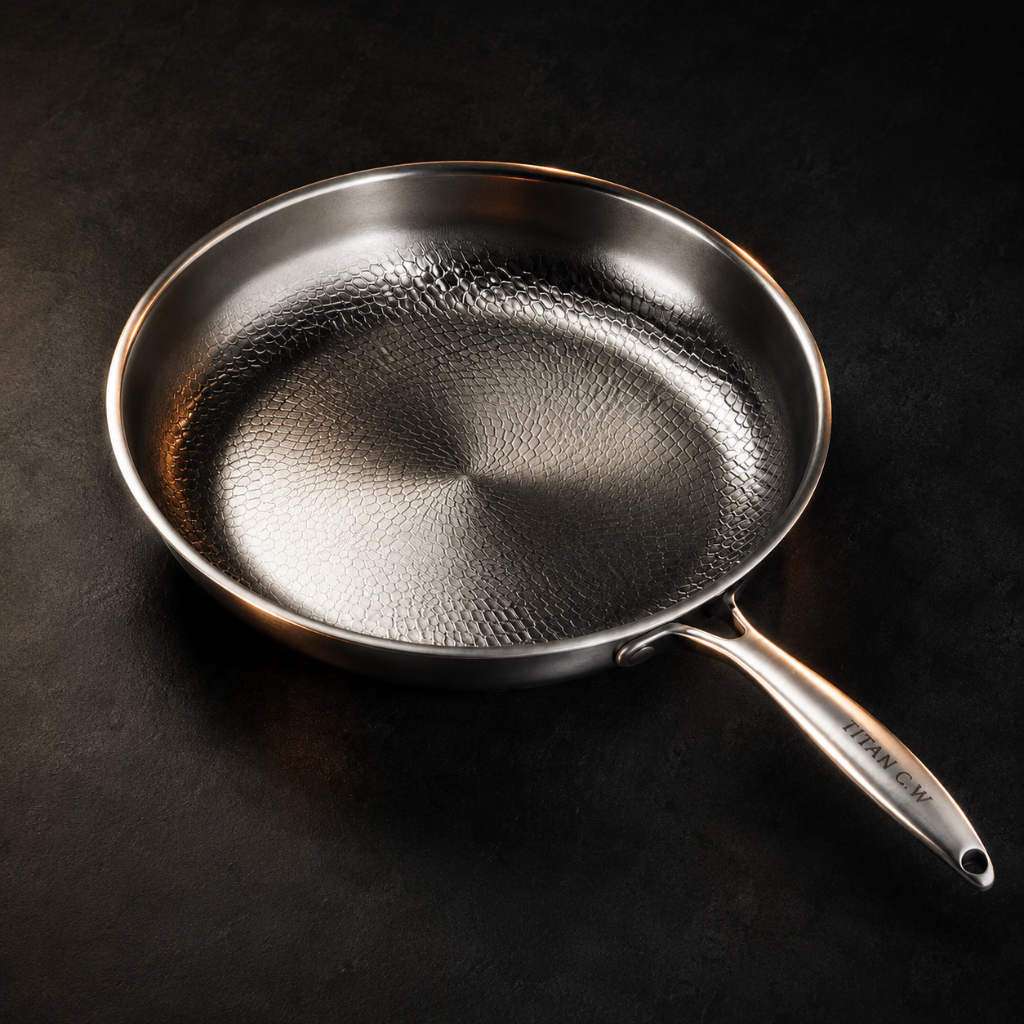
A versatile titanium frying pan designed for everyday frying, searing and stovetop-to-oven cooking, with a durable cooking surface that does not rely on a traditional sprayed non-stick coating.
Related Guides
About the Author
Titan Cookwares Editorial Team