How to Prevent Food Sticking to Titanium Cookware
Quick Answer
Food sticking is usually influenced by pan temperature, moisture, cooking fat, the food itself and when you try to move it — not by a defect in the pan.
Why Food Sticks to Titanium Cookware
Food sticking is usually influenced by pan temperature, moisture, cooking fat, the food itself and when you try to move it. On an uncoated titanium surface, these factors matter more than on a fresh coated non-stick pan.
This does not mean titanium is defective or that it cannot cook well. It means food release depends on technique — and technique can be learned. For the full cooking method, see how to cook with titanium cookware. This guide focuses specifically on why food sticks and what to do about it.
Common Reasons Food Sticks
Pan too cold — Adding food to a pan that has not been properly preheated is the most common cause of sticking. The food bonds to the metal surface before a crust can form.
Pan too hot — If the pan is too hot, the fat can smoke and break down, and the food can burn on contact before it cooks evenly.
Food too wet — Excess moisture on the surface of food (especially proteins) prevents proper browning and can cause sticking. Pat food dry before cooking.
Insufficient fat — A thin layer of fat between the food and the metal surface helps with release. Too little fat, or fat with a smoke point too low for the heat used, can cause sticking.
Moving food too early — Proteins initially stick to a hot pan and release naturally as they cook. If you try to move them before the crust forms, they will tear.
Overcrowding — Too much food in the pan lowers the temperature and traps steam, causing the food to steam rather than sear. This leads to sticking and uneven cooking.
Sugary marinades — Sugar can caramelise and stick to the pan surface. Marinades with high sugar content need careful heat management.
Residue from earlier cooking — If the pan was not fully cleaned after previous use, residue can cause sticking. Because the titanium surface is uncoated, it can be scrubbed clean without concern.
Troubleshooting Table
If you are experiencing a specific sticking problem, use this table to identify the likely cause and what to try.
| Problem | Likely Cause | What to Try |
|---|---|---|
| Eggs sticking | Pan too cold or insufficient fat | Preheat longer on low heat, add more butter or oil, use the crepe pan for easier release |
| Protein tearing when flipped | Moving food before it releases | Wait 2-4 minutes until the food releases naturally before flipping |
| Vegetables steaming not sautéing | Pan overcrowded or too cold | Cook in smaller batches, preheat the pan fully before adding |
| Burnt oil residue on pan | Heat too high for the oil used | Use an oil with a higher smoke point, reduce the heat setting |
| Sauce sticking and burning | Pan too hot or insufficient liquid | Reduce heat, add liquid gradually, deglaze while the pan is warm |
| Food sticking after first use | Residue from previous cooking | Scrub the pan clean with warm water and dish soap — abrasive sponges are safe |
The Preheating Habit
If you take one thing from this guide: preheat the pan properly. A cold pan is the most common cause of sticking on titanium cookware.
Place the empty pan on low to medium heat for 1-2 minutes. Test by flicking a few drops of water onto the surface — if the water beads and evaporates quickly, the pan is ready. Then add fat, let it heat for a few seconds, and add food.
This single habit solves most sticking problems. For the full preheating method, see how to cook with titanium cookware.
Cooking Eggs on Titanium
Eggs are a high-friction food and a common source of frustration. They deserve specific attention because they test food release more than most foods.
Titanium can cook eggs effectively, but technique usually matters more than with a fresh conventional coated non-stick surface. The key is low heat, thorough preheating and enough fat.
For fried eggs: preheat on low heat for 2 minutes, add butter or oil, crack the egg in and let the white set completely before sliding a spatula under it. The titanium crepe pan is ideal for eggs because its low profile makes sliding and flipping easy.
For scrambled eggs: use low heat and stir continuously. Remove from heat just before they look done — residual heat will finish cooking them.
When Sticking Is Normal
Some sticking is part of the cooking process, not a problem. When you sear a steak or chicken breast, it initially sticks to the pan. As the crust forms, it releases. This is the Maillard reaction at work — the browning that gives seared food its flavour.
If you try to flip a protein and it resists, it is not ready. Wait another 30-60 seconds. Once the crust forms, the food will release cleanly. This natural release is a sign that the cooking process is working correctly.
Fond — the browned bits left in the pan after cooking — is also normal and desirable. Deglaze with wine, stock or water to turn it into a sauce.
Building a Patina
Some cooks find that food release improves after the first several uses as the surface develops a patina through normal cooking. This is not the same as seasoning cast iron — titanium does not require seasoning — but the surface does become easier to cook on with use.
If you are in your first few uses and experiencing sticking, give it time. The combination of proper technique and a developing surface patina usually resolves most issues.
Frequently Asked Questions
Why does food stick to my titanium pan?
The most common causes are a pan that is too cold, insufficient fat, moving food before it releases, or excess moisture on the food. Preheating properly and using enough fat solves most sticking problems.
Is titanium supposed to be non-stick?
Uncoated titanium is not non-stick in the same way as a coated non-stick pan. Food release depends on technique — preheating, heat management and fat. With correct technique, food releases well, but it requires more attention than a fresh coated surface.
How do I stop eggs from sticking to titanium?
Use low heat, preheat thoroughly for 2 minutes, add enough butter or oil, and let the egg set before trying to move it. The crepe pan works well for eggs because of its low profile.
Should I use cooking spray on titanium?
No. Cooking sprays can leave a residue that is difficult to remove. Use liquid oil or butter instead, applied with a paper towel or poured directly.
Does food release improve over time?
Many cooks find that food release improves after the first several uses as the surface develops a patina through normal cooking. Combined with proper technique, this usually resolves initial sticking.
Related Products

Titanium Crepe Pan
A low-profile titanium pan designed for crepes, pancakes, eggs and flatbreads, with shallow edges that make it easier to reach, turn and slide delicate foods.
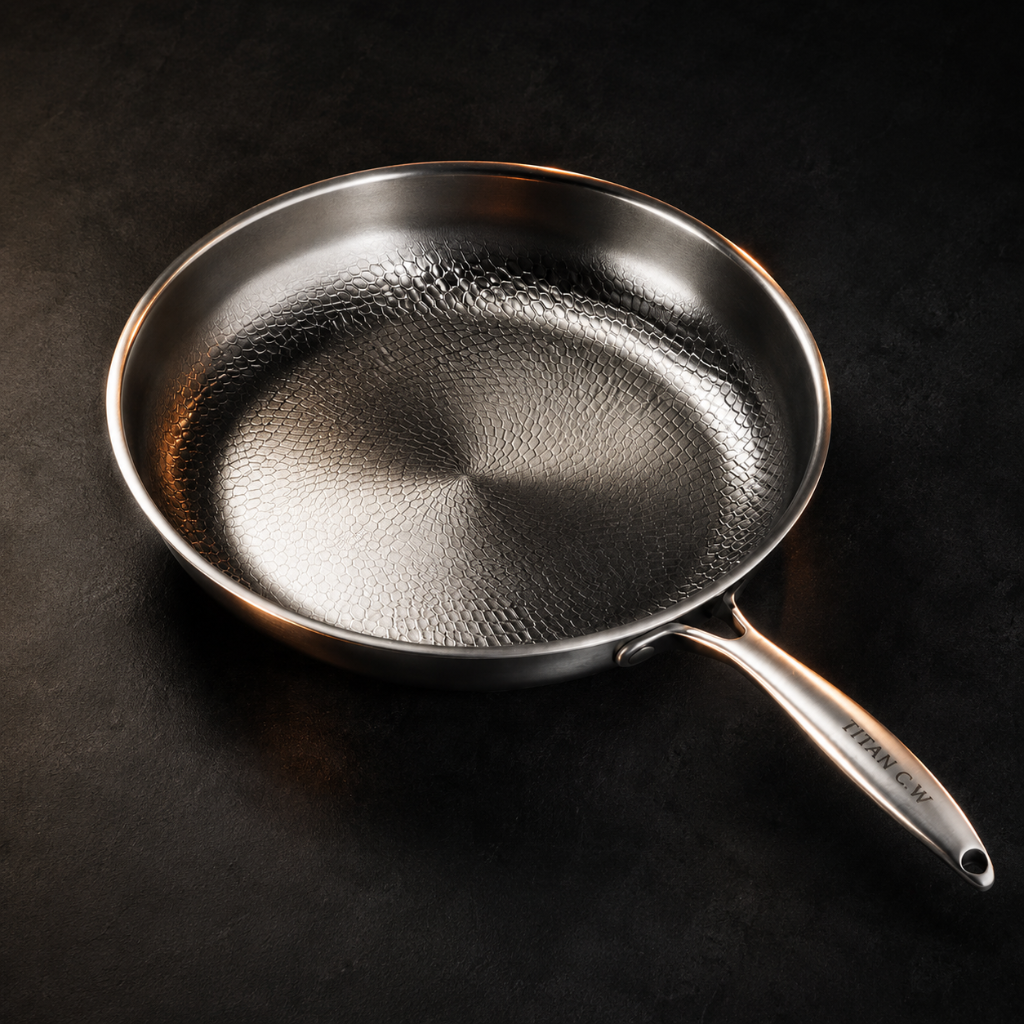
Titanium Frying Pan
A versatile titanium frying pan designed for everyday frying, searing and stovetop-to-oven cooking, with a durable cooking surface that does not rely on a traditional sprayed non-stick coating.
Related Guides
About the Author
Titan Cookwares Editorial Team