How to Sear Meat in Titanium Cookware
Quick Answer
Pat the protein dry, preheat thoroughly, use a suitable cooking fat, and wait for the crust to form before moving. Proteins release naturally once browned.
Quick Method
- 1.Pat the protein dry and season it.
- 2.Preheat the pan on medium-to-medium-high heat until ready.
- 3.Add a small amount of cooking fat with a suitable smoke point.
- 4.Place the protein in the pan and do not move it immediately.
- 5.Let it brown and release naturally, then turn and finish cooking.
Why Searing Works
Searing creates a browned crust on the surface of meat through the Maillard reaction — a chemical reaction between amino acids and sugars that occurs at high temperatures. This adds flavour and colour. Searing does not "seal in" juices, which is a common myth, but it does produce a flavourful crust.
Prepare the Protein
Pat the surface of the meat dry with a paper towel before cooking. Moisture on the surface will steam rather than brown, preventing a good crust. Season with salt before searing; pepper can be added during or after cooking to avoid scorching.
Preheat Thoroughly
Preheat the pan on medium-to-medium-high heat. See how to preheat a titanium pan for readiness cues. For searing, the pan needs to be hot enough that the protein sizzles on contact, but not so hot that the cooking fat burns immediately.
A titanium frying pan or titanium sauté pan both work for searing. The sauté pan's higher walls and larger capacity are useful for larger cuts or for making a pan sauce afterwards.
Choose the Right Cooking Fat
Use a cooking fat with a smoke point suitable for searing. Clarified butter, light olive oil, or neutral vegetable oils work well. Regular butter can brown and burn at searing temperatures — if you want butter flavour, add it near the end of cooking and baste.
Place and Wait
Place the protein in the pan and do not try to move it immediately. Proteins can adhere to the surface initially and release more easily once a browned crust has formed. Trying to move or flip too early will tear the crust and leave bits behind.
After a minute or two, test by gently lifting an edge. If the protein releases easily, it is ready to turn. If it resists, let it cook a little longer and try again.
Don't Overcrowd the Pan
Cook in batches if needed. Too many pieces in the pan at once will lower the surface temperature and cause steaming instead of browning. Leave space between pieces so heat can reach the surface of each one.
Managing Heat
After searing, you may need to reduce the heat to finish cooking through without burning the outside. This depends on the thickness of the cut and the heat of your hob. Very thick cuts may be better finished in the oven — check whether your Titan cookware is oven-safe (all Titan cookware is oven-compatible).
Do not use extreme temperatures merely to achieve a crust. The pan's construction and the fat's smoke point both matter. If the fat is smoking heavily, the heat is too high.
Using Pan Fond (Deglazing)
After searing, browned bits may remain on the pan surface — this is called fond. You can deglaze the pan by adding a liquid (such as stock or wine) and scraping gently to loosen the fond, creating a base for a pan sauce.
Use a liquid appropriate to your recipe. If you are unsure about using acidic liquids with your specific cookware, refer to the care guidance that came with your pan. Titan's uncoated titanium surface tolerates normal deglazing with common cooking liquids.
Troubleshooting
Use the table below to diagnose common searing problems.
| Problem | Likely Cause | Adjustment |
|---|---|---|
| Protein sticks and tears when moved | Moved too early or not enough browning yet | Wait until the crust forms and the protein releases naturally before turning |
| Crust burns before the centre cooks | Heat too high for the thickness | Reduce heat after searing, or finish a thick cut in the oven |
| Protein steams instead of browning | Surface wet or pan overcrowded | Pat dry before cooking and cook in batches |
| Fat smokes heavily during searing | Fat's smoke point too low or heat too high | Use a higher smoke-point fat or reduce the heat |
| Uneven browning | Pan not preheated evenly or protein uneven | Preheat thoroughly and press protein flat for even contact |
Frequently Asked Questions
Does searing seal in the juices?
No. Searing creates a flavourful crust through the Maillard reaction, but it does not seal in juices. Resting the meat after cooking is what helps retain moisture.
Why does my meat stick when I try to flip it?
It likely needs more time. Proteins adhere initially and release more easily once a browned crust forms. Wait until it lifts easily before turning.
What heat should I use for searing?
Medium-to-medium-high is a good starting point. The pan should be hot enough that the protein sizzles on contact, but not so hot that the fat burns. Adjust based on the thickness of the cut.
Can I make a pan sauce in the same pan?
Yes. After searing, deglaze with stock or wine to loosen the fond and create a sauce base. Titan's uncoated surface tolerates normal deglazing with common cooking liquids.
Should I use the frying pan or the sauté pan for searing?
Both work. The frying pan is good for quick sears and flips. The sauté pan's higher walls and larger capacity are useful for bigger cuts or finishing with a sauce.
Related Products
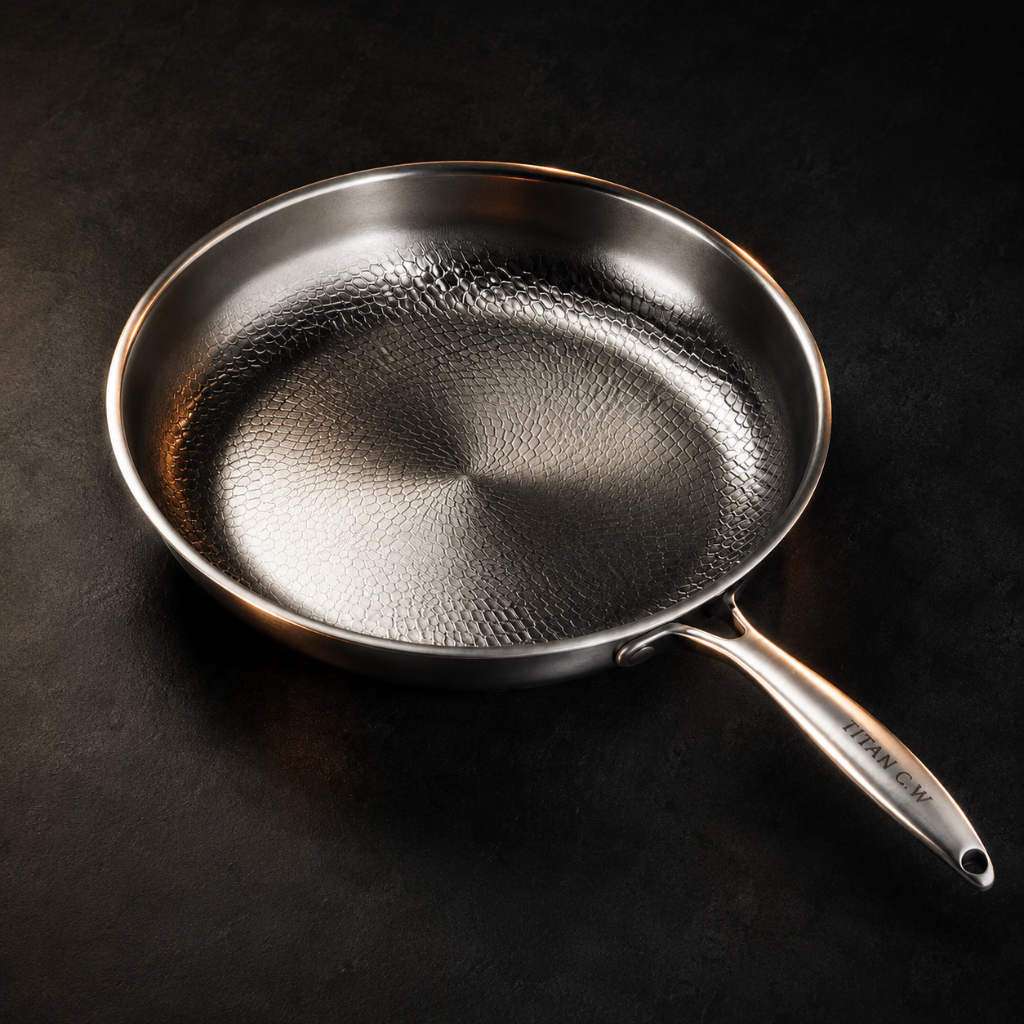
Titanium Frying Pan
A versatile titanium frying pan designed for everyday frying, searing and stovetop-to-oven cooking, with a durable cooking surface that does not rely on a traditional sprayed non-stick coating.

Titanium Sauté Pan
A deeper titanium sauté pan designed for family meals, sauces, simmering and larger one-pan recipes. Two side handles make it easier to lift, carry and serve than a comparable long-handled pan.
Related Guides
About the Author
Titan Cookwares Editorial Team