How to Use a Titanium Wok
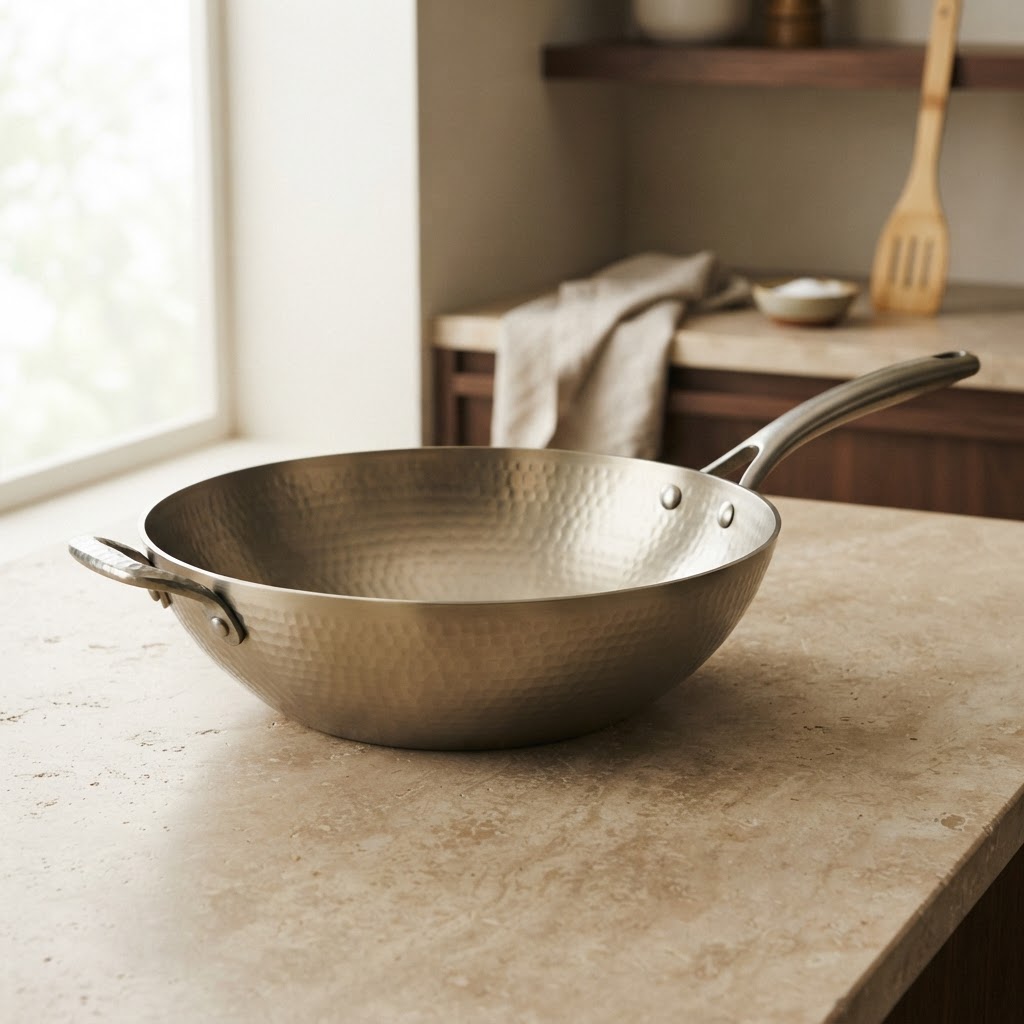
Quick Answer
Prep everything first, cook in batches, avoid overcrowding, and add sauce late. A domestic flat-base wok produces good home cooking — not restaurant wok hei.
Quick Method
- 1.Prepare and portion all ingredients before turning on the hob.
- 2.Preheat the wok on medium heat, then add a small amount of oil.
- 3.Cook protein in small batches; remove and set aside if needed.
- 4.Cook aromatics and vegetables, avoiding overcrowding.
- 5.Return protein, add sauce late, and toss to combine.
Prepare Ingredients First
Wok cooking moves quickly once the heat is on, so everything should be prepped before you start. Cut protein into even pieces, slice vegetables, mix sauces, and have them within reach. This is sometimes called mise en place.
If you stop to chop or measure mid-cook, the wok stays on the heat and ingredients can overcook or burn while you work.
Preheat the Wok
Place the titanium wok on a medium heat and let it warm. See how to preheat a titanium pan for general preheating cues — the same principles apply. The wok's flat base and high walls mean heat distribution may differ from a standard frying pan, so take a moment to learn how your hob heats it.
Add Oil
Once the wok is warm, add a small amount of cooking oil and swirl or spread it across the base and partway up the walls. Let the oil become fluid before adding ingredients.
Cook Protein in Manageable Batches
Add protein in a single layer without overcrowding. If the wok is too full, the protein will steam rather than brown. Cook in batches if needed, and remove cooked protein to a plate while you cook the rest.
This is especially important for a flat-base domestic wok, which has a smaller high-heat zone than a round-bottom commercial wok on a high-BTU burner.
Cook Aromatics and Vegetables
After removing protein, add aromatics (garlic, ginger, onion) and stir briefly. Then add vegetables, starting with those that take longest. Keep ingredients moving to cook evenly and prevent scorching.
Return Protein and Add Sauce
Return the cooked protein to the wok, add your sauce, and toss everything together. Add sauce late in the process — adding it too early can lower the pan temperature and cause steaming rather than coating.
Noodles and Fried Rice
For noodle dishes and fried rice, use day-old or cooled rice and cooked noodles. Add them after the protein and vegetables are mostly done, and toss to combine with sauce. Avoid adding too much at once — a crowded wok steams instead of frying.
Managing Moisture and Overcrowding
Wet vegetables, frozen ingredients, or too much food in the pan at once will lower the surface temperature and cause steaming instead of browning. The table below helps diagnose common issues.
| Problem | Likely Cause | Adjustment |
|---|---|---|
| Food steams instead of browning | Pan overcrowded or too much moisture | Cook in smaller batches; pat wet vegetables dry before adding |
| Protein does not brown | Pan not hot enough or too much food at once | Preheat adequately and cook in single-layer batches |
| Food burns on the base | Heat too high or not enough stirring | Reduce heat and keep ingredients moving |
| Sauce boils rather than coating | Added too early or pan too cool | Add sauce late, after protein and vegetables are nearly done |
| Vegetables go soggy | Too many at once or wet surfaces | Cook in batches and dry vegetables before adding |
Domestic vs Restaurant Wok Cooking
A domestic flat-base titanium wok on a standard hob is a practical, versatile tool, but it is not identical to a carbon-steel wok on a commercial high-BTU burner. Restaurant kitchens use very high heat and specialised equipment to achieve wok hei — a smoky, charred flavour that is difficult to replicate at home.
This does not mean home wok cooking is inferior. It means the results will be good home cooking, not restaurant-style wok hei. Focus on even cooking, good browning, and balanced flavour rather than trying to replicate commercial conditions.
Cleaning the Wok
After cooking, let the wok cool, then wash with warm water and dish soap. Titan's uncoated surface tolerates abrasive sponges. See how to clean titanium cookware for full guidance.
Frequently Asked Questions
Can I achieve wok hei on a domestic hob with a titanium wok?
Wok hei typically requires very high heat and a round-bottom wok on a commercial burner. A domestic flat-base wok on a standard hob will produce good home cooking, but not restaurant-style wok hei.
Why does my stir-fry turn out soggy?
Usually because the pan is overcrowded or the ingredients are too wet. Cook in smaller batches, pat vegetables dry, and avoid adding too much food at once.
Do I need to season my titanium wok?
No. See [does titanium cookware need seasoning] for the difference between traditional seasoning and light oiling. Titan cookware does not require seasoning.
Can I use metal utensils in the wok?
Yes. Titan's uncoated surface has no coating to scratch, so metal utensils are fine.
Should I use high heat for wok cooking?
Medium-to-medium-high heat works well for most home wok cooking. Very high heat can burn oil and food without improving results. Focus on even cooking and avoiding overcrowding.
Related Products

Related Guides
About the Author
Titan Cookwares Editorial Team