Titanium vs Traditional Non-Stick Cookware
Quick Answer
Traditional coated non-stick pans offer very easy food release, especially when new — that is a real advantage. Uncoated titanium requires preheating and technique but has no coating to degrade. Neither is universally better; the choice depends on whether you prioritise immediate convenience or a durable, coating-free surface.
References
- Per- and Polyfluoroalkyl Substances (PFAS) — U.S. Environmental Protection Agency (accessed September 9, 2026)
- PTFE (Polytetrafluoroethylene) — Royal Society of Chemistry (accessed September 9, 2026)
Last fact-checked September 9, 2026
Related Products
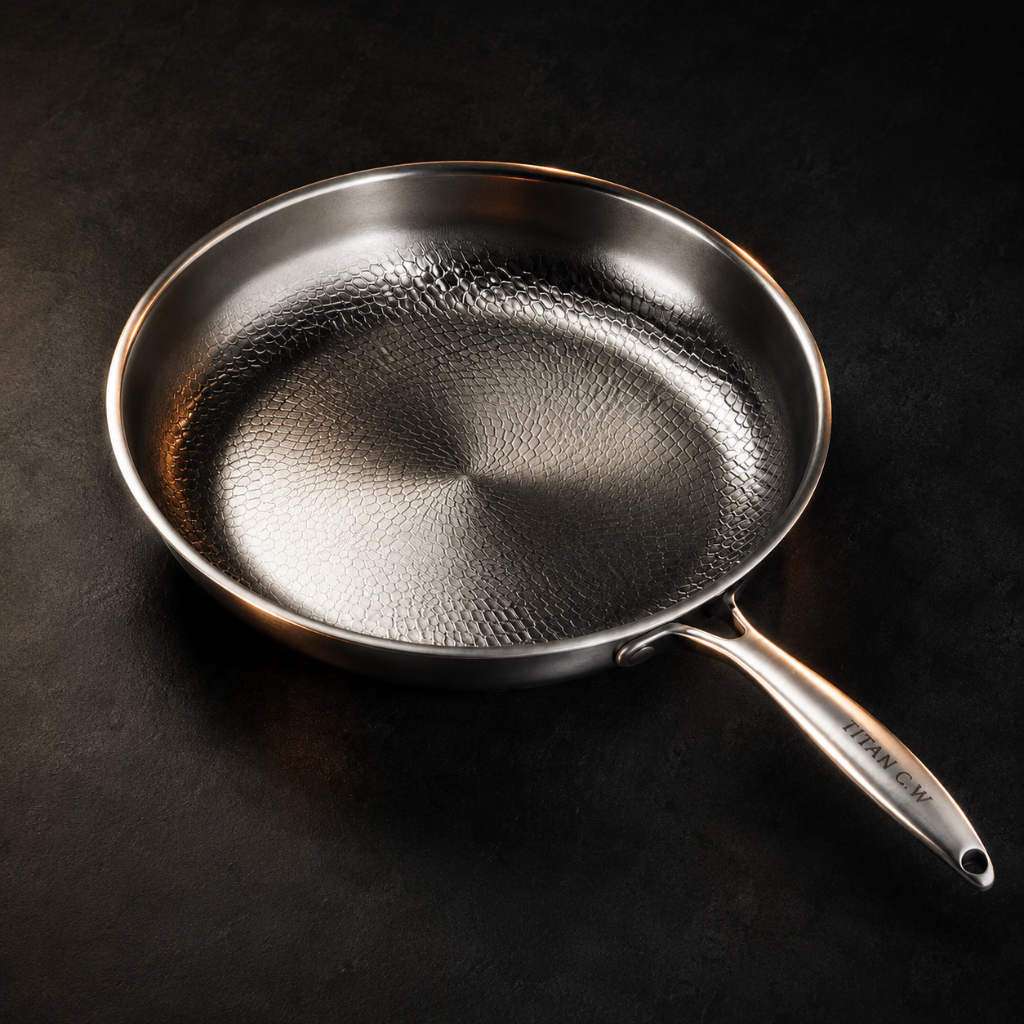
Build Your Own Titanium Set
Choose your pieces, select your sizes and create a titanium cookware set that fits the way you cook.
Build Your SetRelated Guides
Is Titanium Cookware Safe?
Titanium cookware is widely considered safe for cooking. Titanium is biocompatible — it is used in medical implants and dental fixtures — and uncoated titanium pans do not require PFAS, PTFE, or other synthetic coatings that can raise health concerns. The main consideration is buying from a reputable manufacturer, since quality varies.
Titanium vs Ceramic Cookware
Ceramic cookware offers good non-stick performance out of the box but the coating typically degrades after 1–3 years. Titanium has no coating to degrade and can last decades, but requires more technique for food release. If you want effortless non-stick, ceramic is easier short-term; if you want a lifetime pan, titanium is the better investment.
About the Author
Titan Cookwares Editorial Team