Why Does Titanium Cookware Change Colour?
Quick Answer
Colour changes can be caused by oxide formation, oil residue, mineral deposits, or burnt food. If the surface is smooth and the shape is unchanged, it is usually cosmetic. Warping, cracking, or a loose handle need attention.
Short Answer
Titanium cookware can develop colour changes on the cooking surface over time. These may be caused by heat-related oxide formation, oil or fat residue, mineral deposits from water, or burnt food residue. Not all colour changes are the same, and not all indicate a problem.
If the surface is smooth, the shape is unchanged, and the handle is secure, colour changes are usually cosmetic. Warping, cracking, peeling, or a loose handle are different issues that need attention.
Titanium Oxide and Interference Colours
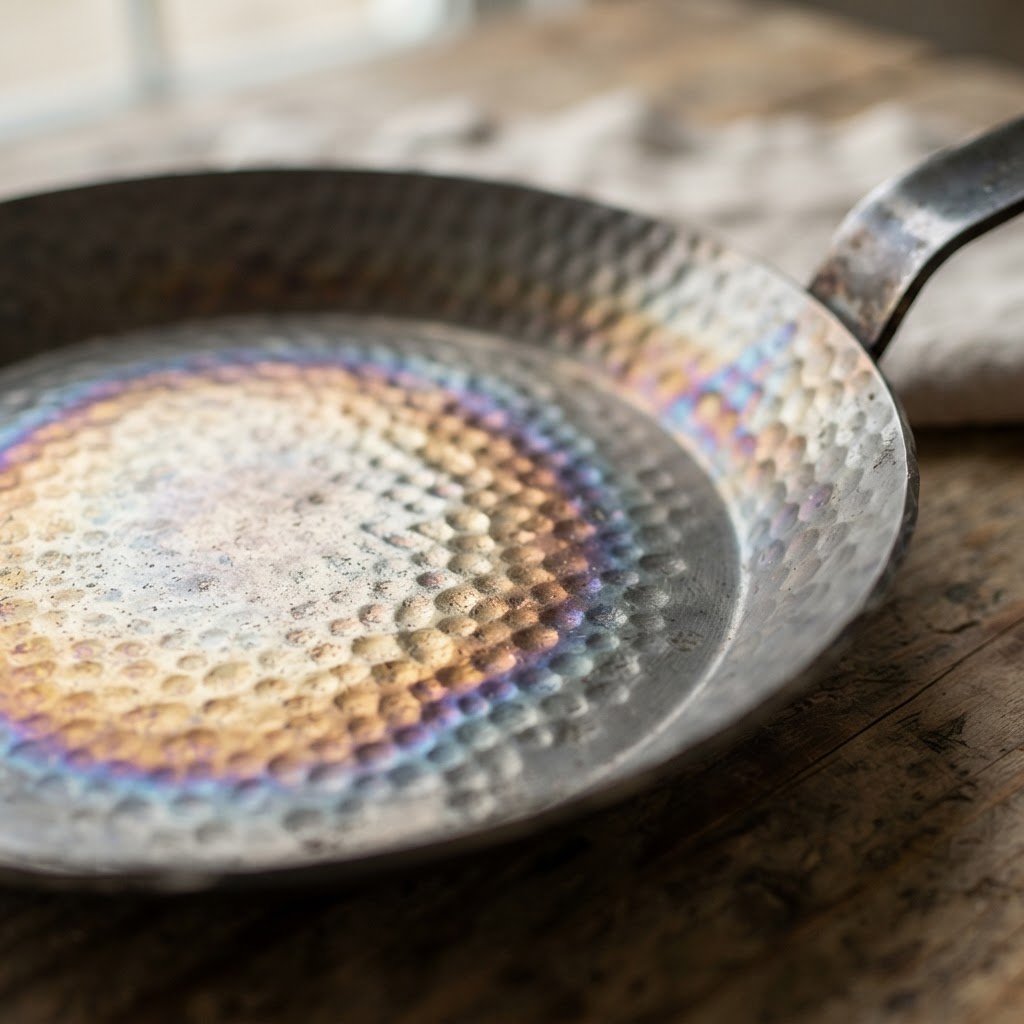
Titanium naturally forms a thin oxide layer on its surface when exposed to air. This oxide layer is stable and is one of the reasons titanium is resistant to corrosion. When the oxide layer is very thin, it can produce interference colours — subtle rainbow or iridescent tints — because light reflects off both the top and bottom of the thin film.
This is a known property of titanium and titanium oxide. The colour depends on the thickness of the oxide layer, which can be influenced by heat. This is sometimes called heat tint.
However, not every colour change on a titanium pan is necessarily heat tint from the oxide layer. The actual surface of a cookware product may involve surface finish, residue, or other factors. Do not assume every mark is harmless oxide colour without considering other causes.
Other Causes of Colour Changes
Colour changes can also come from: oil or cooking fat that has polymerised or burnt onto the surface; mineral deposits from hard water; food residue that has carbonised; or staining from certain ingredients. These are residue-related, not oxide-related, and may respond to cleaning.
See how to clean titanium cookware and how to remove burnt food from titanium cookware for guidance on removing residue. If a colour change is caused by residue, cleaning may reduce or remove it. If it is caused by oxide formation in the metal surface, cleaning will not remove it — but it is generally harmless.
Is It a Defect?
Use this guidance to decide whether a colour change needs attention:
| Observation | Likely Interpretation | Action |
|---|---|---|
| Subtle rainbow or iridescent tint, smooth surface | Possible heat tint from titanium oxide | Cosmetic — no action needed unless you wish to clean the surface |
| Yellow or brown film that may be greasy | Polymerised oil or fat residue | Clean with warm water, dish soap, and a sponge |
| White or chalky marks | Mineral deposits from hard water | Clean with warm water and dish soap; a short soak may help |
| Dark, crusty patches | Burnt food residue | Soak and clean — see the burnt food guide |
| Warping, bulging, or uneven base | Structural change | Contact support — this is not a colour issue |
| Cracking, peeling, or flaking surface | Surface or construction issue | Contact support |
| Loose or wobbly handle | Handle or fastener issue | Contact support |
When to Be Concerned
Colour changes alone — where the surface remains smooth and the pan's shape and structure are unchanged — are generally not a cause for concern. They are a normal part of using uncoated cookware.
You should contact support if you notice: warping or bulging of the base; cracking or splitting of the metal; a surface that is peeling or flaking; a handle that is loose, cracked, or detaching; or any other structural change. These are not colour issues and may indicate a manufacturing defect or damage that needs assessment.
Can Colour Changes Be Removed?
If the colour is from residue (oil, minerals, food), cleaning may reduce or remove it. See how to clean titanium cookware for safe cleaning methods.
If the colour is from oxide formation in the titanium surface itself, it is part of the metal and will not be removed by normal cleaning. This is generally harmless and does not affect cooking performance. We do not recommend using polishing chemicals or abrasive compounds to try to remove oxide colour unless specifically confirmed as safe for your product.
Frequently Asked Questions
Is rainbow colour on my titanium pan normal?
Subtle rainbow tints can be caused by the natural oxide layer on titanium, which produces interference colours. This is generally harmless. However, not all colour changes are oxide-related — some may be residue. Check the table in the article to distinguish.
Does discolouration mean my pan is damaged?
Not usually. If the surface is smooth and the shape is unchanged, colour changes are typically cosmetic. Warping, cracking, peeling, or a loose handle are different issues that need attention.
Can I remove the rainbow colour?
If it is from residue, cleaning may help. If it is from oxide formation in the metal surface, it is part of the titanium and will not be removed by normal cleaning. It is generally harmless.
Should I use a metal polish to restore the surface?
We do not recommend polishing chemicals or abrasive compounds unless specifically confirmed as safe for your product. Normal cleaning with warm water, dish soap, and a sponge is sufficient for residue.
Why did my pan change colour after one use?
This can happen after the first few uses as the surface reacts to heat and cooking fats. If the surface is smooth and the shape is unchanged, it is usually cosmetic. If you are unsure, compare against the table in this article.
References
- Titanium — Royal Society of Chemistry — Periodic Table (accessed September 9, 2026)
Last fact-checked September 9, 2026
Related Products

Titanium Crepe Pan
A low-profile titanium pan designed for crepes, pancakes, eggs and flatbreads, with shallow edges that make it easier to reach, turn and slide delicate foods.

Titanium Sauté Pan
A deeper titanium sauté pan designed for family meals, sauces, simmering and larger one-pan recipes. Two side handles make it easier to lift, carry and serve than a comparable long-handled pan.

Titanium Wok
A high-sided titanium wok designed for stir-fries, noodles, fried rice and larger one-pan meals. The flat-base design is intended for use on compatible flat cooktops while the sloped sides give you room to toss, turn and move food.
Titanium Frying Pan
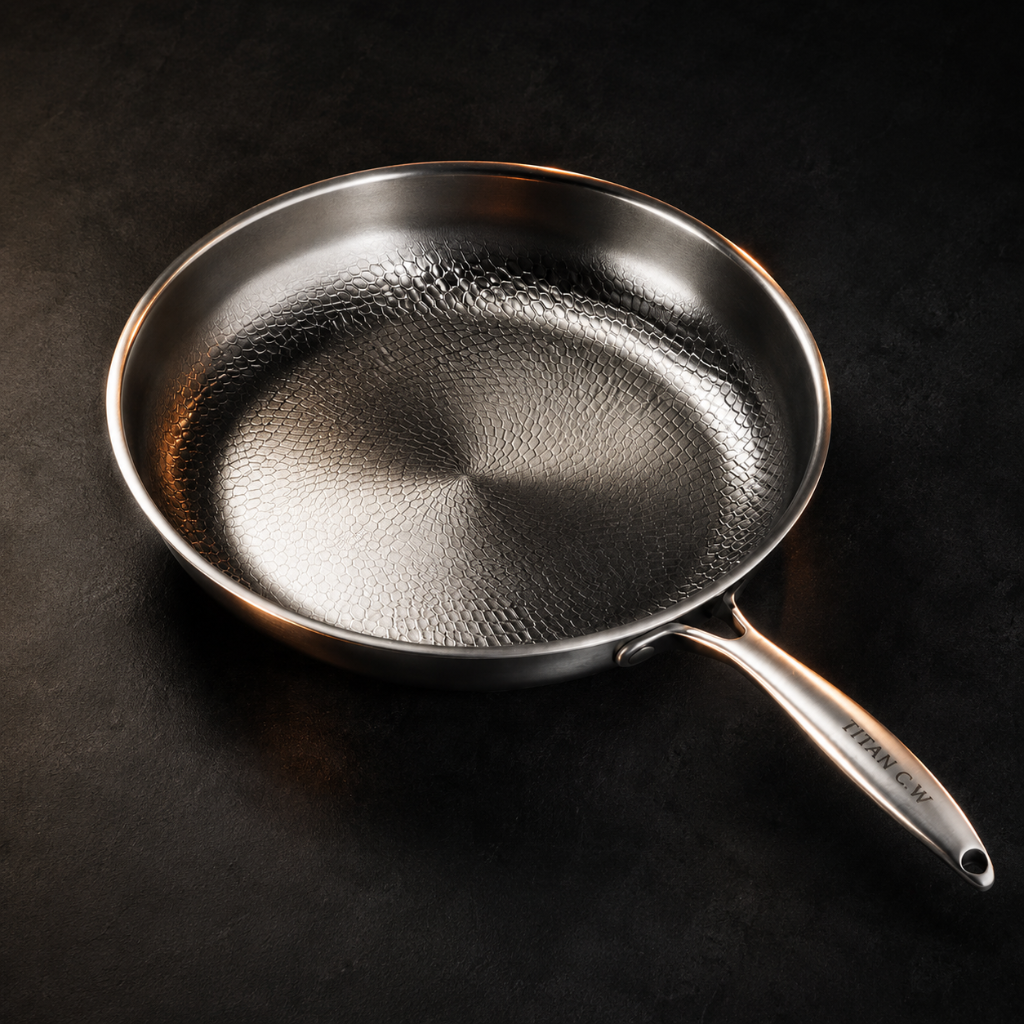
A versatile titanium frying pan designed for everyday frying, searing and stovetop-to-oven cooking, with a durable cooking surface that does not rely on a traditional sprayed non-stick coating.
Related Guides
About the Author
Titan Cookwares Editorial Team